Pages

Showing posts with label Vueling. Show all posts

Tuesday, 29 January 2013

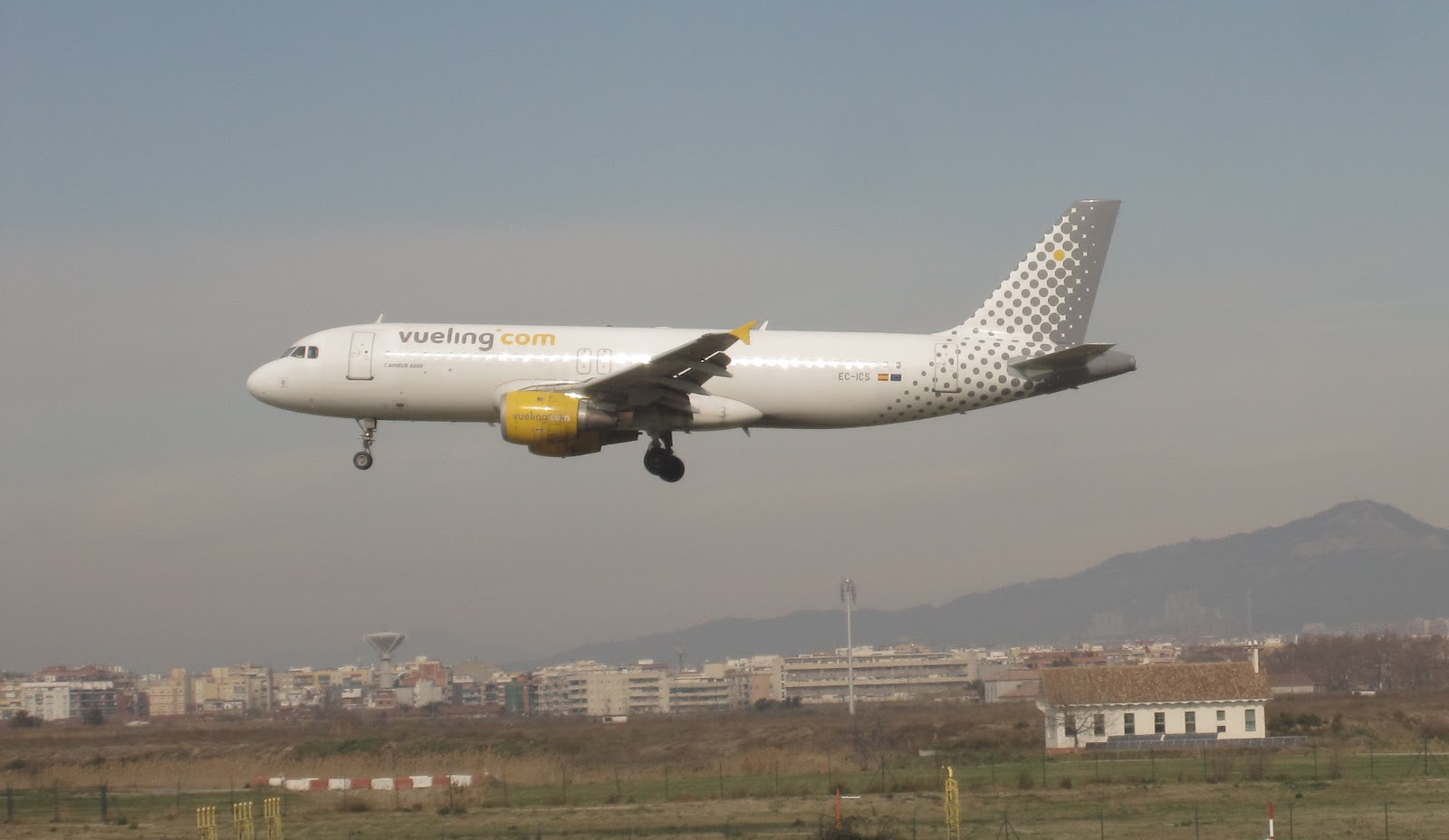
Iberia, Vueling and IAG (continued...)

By the way, to clarify, my previous article was motivated by this piece on the FT that points towards IAG using Vueling to cover most of Iberia's short-haul network...

It makes sense on paper, but Iberia's unions have an agreement with the company that prevents Vueling from flying little more than a few routes out of Madrid...this adds to an already very tense labour situation at the Spanish flag carrier.

Monday, 28 January 2013

Vueling taking over Iberia's network?...not so easy...


  Too close for comfort

The more details that emerge of IAG's plans for Iberia, the closer we get to the scenario anticipated in this blog a few months ago (and see also this other post).

Why create a low cost carrier from scratch when you already have one in-house?

It would make sense for IAG (and British Airways) to roll out the Vueling brand across all of Iberia's short haul network...but it won't be easy: there are labour agreements in place whose purpose is to prevent exactly this from happening...so brace for more industrial turbulence on its way!

(Translation: I would check the industrial action calendar before booking any flight with Iberia in the coming months!)

Saturday, 22 December 2012

The comeback of the airline hotel?

I hope there's some more legroom than in their aircraft!

I have read that Barcelona-based airline Vueling has set up a joint-venture with Hoteles Catalonia in order to launch Vueling-themed hotels for its travelers. These hotels will be marketed under the "Vueling by HC" brand. The first hotel and test-bed for this concept will be launched in central Barcelona shortly and its design is going to be inspired in the fresh casual-looking style sported by the airline.

It is an interesting move, because, setting aside Easyhotel, which is part of the much broader Easygroup brand portfolio, airline hotels seemed to have fallen out of fashion in the last two decades...

It was not always like this, there was a time when every self-respecting flag carrier used to run its own hotel chain. In fact some of today's international hotel chains have been historically linked to airlines, this is the case of Swissotel (originally a joint-venture between Swissair and Nestlé), of Golden Tulip (linked to KLM), of Radisson (SAS), although most of these airlines withdrew from the hotel business at some point in the last decade, either forced by their financial situation or for strategic reasons.

Sabena was one of the airlines with the largest hotel networks, often providing the top accommodation options in the African capitals covered by its network. In this picture, the Memling Hotel, originally a Sabena hotel, in 1970s Kinshasa, in the Democratic Republic of Congo (called Zaire at the time)

By the way, Sabena's Kigali hotel became famous after becoming a refugee shelter during the Rwandan genocide, in the events that were later depicted in the film Hotel Rwanda.

If we look back a few decades, to the early days of commercial aviation, when international hotel brands where not as widespread as they are now it possibly made lots of sense to offer a complete package to your regular customers (mostly businessmen and affluent people in those times) that might wish to avoid being exposed to variable service standards depending on the destination.

As air travel becomes more commoditized it might make sense to go back the provision of comprehensive travel experiences though, and who best positioned that the airline, that is often the first gateway to travel bookings...I just hope that the size of rooms and beds is not proportional to the seat pitch on their aircraft!

Sunday, 16 December 2012

Vueling's two frequent flier programmes: which one's best?


I am about to book a flight with Vueling and I got to the point where I need to decide which frequent flier programme do I wish to use: Vueling Punto or Iberia Plus?

It seems that, although, both Iberia Plus and BA's Executive Club use the same "currency", Avios, and they both belong to IAG, their frequent flier programmes, unlike, for example, Air France-KLM's Flying Blue, are still run separately.

I am a Vueling Punto member, although I have seldom used it, but I gave up with Iberia Plus and switched to British Airways' Executive Club instead...so it seems that for me the best option is to stick with Vueling Punto but I have made myself the following question:

Are there any specific advantages of being on Vueling Punto instead of being on Iberia Plus? I mean, if Iberia Plus lets you collect avios both on Vueling AND on other Oneworld airlines whereas the former only lets you collect miles on Vueling. What is the point of holding the Vueling Punto? or maybe the "Exchange rate" between punto and Avios is not that favourable?

Any frequent flier programme experts in the room?

Wednesday, 7 November 2012

IAG to bid for Vueling?

To bid or not to bid?

The news was out this evening that IAG is considering a bid for the share of Vueling it does not yet control (here is the official communication on the website of the Spanish stock-market regulator).

We will have to wait until Friday to know the details, but it makes sense...IAG is heading to an attrition war with Iberia's unions over the creation of its new low cost subsidiary, Iberia Express (and after this week's court ruling, there is no solution in sight anytime soon). The "new" carrier is IAG's attempt to stem losses at Iberia, particularly in the short and medium haul network.

And while Iberia is in turmoil, and as I already noted here a few days ago, Vueling (that is 40% owned by Iberia) appears to be in good shape. Such an irony, because Vueling is already exploiting successfully the sort of hybrid model that Iberia Express was trying to bring to Iberia's short and medium haul network!

What next then? 

As I said, it's early to say, the offer has not even been formalized, but things are getting interesting...

Could Vueling take progressively take over the Iberia Express project while Iberia focuses on the long-haul routes? After all, Iberia already had a "sister" company until the 90s, Aviaco, that was doing most of the domestic flights in Spain.

This option might not be good news for Barcelona airport, since there might be a risk, if Vueling "becomes Iberia" that the carrier will shift its focus away from its current base, where a major expansion is currently under way (or alternatively that it will split its fleet and network between Barcelona and Madrid).

Could the goal be merely financial, to consolidated the profitable Vueling operation in the not-so-good Iberia's accounts?

Is IAG planning to keep it as it is now, a stand-alone operation, while trying to extract more synergies and know-how from Vueling's experience in running a successful low-cost (or we should better say "hybrid") operation?

Let's wait until Friday to see whether anything new comes out of Iberia's results presentation!

Sunday, 21 October 2012

Iberia and Vueling on diverging flight paths

I just read an article on a Spanish news portal (in Spanish, "Iberia tenemos un problema"-"Iberia, we've got a problem") that warns about the difficult situation Spanish carrier Iberia is currently in.

Nothing that I had not brought up on this blog before: see my article of just a few days ago ("IAG's Spanish problem, Iberia Express and Vueling").

There are not many successful cases of network carriers creating spinning-off profitable low cost airlines, as noted recently by industry blogger Cranky Flier, not to mention the adverse effect it could have on your brand.

In Iberia's case, the problems are compounded by ongoing labour litigation that could take away all the labour cost reductions achieved with the creation of Iberia Express, its new low cost subsidiary...

Going through turbulence...

The ironical thing here is that, while this happens, Vueling, an airline that is 40% owned by Iberia, seems to be going from strength to strength, and it is actually "upgrading" its brand and services and recently announcing a major fleet and network expansion at its Barcelona base (although some Vueling frequent fliers tell me that the carrier has still some way to go in terms of reliability and customer service in order to shake off the "low cost" label completely).

An interesting case of business-fiction prospective would be the situation where Vueling ends up taking over Iberia's short and medium haul operations...seems quite far fetched at present, but about a decade ago we saw former regional operator Crossair taking over its bankrupt parent, the once mighty Swissair and more recently Austrian Airlines corporate structure being gradually folded under Tyrolean Airways (although keeping its brand).

Tuesday, 16 October 2012

Vueling keeps growing, plans to fly to a 100 cities from Barcelona

More like this coming soon!

There was quite a lot of expectation today to hear what Vueling had to announce.

And there were interesting novelties, as Vueling continues to upgrade its product with the introduction of a business class. One step that was anticipated as it fits into the carrier's strategy to target business travellers.  So, this announcement did not really come as a surprise, as I had already pointed out in these pages how there were objective measures to qualify Vueling as a hybrid airline rather than a low cost carrier and the airline's top managers had already provided some hints about the imminence of this move.

Regarding fleet renewal and expansion programme Vueling will be getting some 9 brand-new aircraft of the A320 family shortly (at the moment is still flying some Iberia-then-Clickair 1990s-vintage A320s) and some of them will be equipped with wi-fi.  The first (unanswered) question that comes to my mind is whether this means the end of Vueling's flirtation with Bombardier's CSeries...

Another important novelty is the massive route expansion out of Barcelona and into Europe and Africa.   The new twice daily service between Barcelona and London Gatwick really stands out, because until now Vueling had avoided head-to-head competition on this route with Easyjet and Ryanair. Also of note is the airline'e first foray into sub-saharan Africa, where it is "taking over" the niche route to Banjul, that used to be operated quite successfully by now-defunct rival Spanair. New routes to Morocco reinforce the growing presence of Vueling in Africa, that I commented already a few months ago. 28 new routes in total for the summer season (you can find the list here) that will bring to 100 the number of direct destinations operated by Vueling from Barcelona.

In another example of the company's hybridisation, Vueling's CEO Alex Cruz said that he aims to make of Barcelona one of Europe's top hubs (I guess he was referring to intra-European connections, since there are still few long-haul flights at Barcelona that Vueling's passengers can connect too). In order to support this claim he revealed that transit passengers already make 20% of total traffic (not a bad number for a company that was not initially conceived as a hub-and-spoke network carrier!).

The hub-in-the-Med possibility that I outlined nearly two years ago might finally come to fruition after all...


Monday, 10 September 2012

IAG's Spanish problem, Iberia Express and Vueling


The future does not look bright for Iberia. IAG latest financial results showed that the Spanish flag carrier has become a drag on the the group's financial performance. IAG's CEO, Willie Walsh has already warned that tough measures must be taken...

And what now seems inevitable is that Iberia's short and medium haul network will be progressively taken over by Iberia Express, the vehicle that IAG has chosen to get rid of the existing labour relations framework at Iberia. For Iberia's customers the change to Iberia Express should not be a big change...for now...because, Iberia Express might have been helpful in taming some structural cost issues within the company (Iberia Express is already profitable), however, it can do little against the huge exogenous pressures currently affecting the Spanish air travel market, like the deep economic crisis and the strong competition from other low cost carriers (among the major European markets, is possibly the one where LCCs enjoy a larger marjet share).

So it is not unlikely that, while keeping some network carrier features, most important of all, feeding Iberia's long-haul network, or what's left of it, Iberia Express, and the rest of the airline, might have to undergo a process of "low-costization".

Curiosly enough Iberia is the major shareholder of another Spanish low cost, and one that is profitable: Vueling. The Barcelona-based carrier is actually on an opposite path: whereas Iberia might end up trading-down, Vueling is trading-up and offering more and more extras to its passengers, in a drive to attract business customers.

Will Vueling and Iberia (Express) end up occupying the same market space?

If this happens, will the two brands be kept? In theory, there is no need to, despite its shareholding Vueling is an independent company and it has its hub at Barcelona, whereas Iberia Express is based at Madrid. However, it is not unthinkable that Vueling becomes more operationally entangled with Oneworld's operations in Spain as it starts to codeshare more and more, take on feeding operations, etc. Will there be a temptation to consolidate Vueling and what's left of Iberia in a big low cost operation? Who would then have the strongest brand? and right structure and "mind-set" to operate as a low cost?  an strengthened Vueling or a "downgraded" Iberia?

Of course, the most likely outcome is that nothing of this might actually end up happening, but "what if" scenarios are always entertaining...

Monday, 16 July 2012

What happened to all those Spanair and Malev aircraft?


 When it comes to financial stability, the airline industry has a terrible reputation (and track record!). We had a reminder early this year with the disappearance of Spanair and Malev.

But, have you wondered where do all these aircraft go when an airline goes bust?

I did, and The Sun (I know! not my top source of aviation knowledge though..) has provided part of the answer. At least 24 ex-Spanair and ex-Malev planes made their way to Ireland to be stored at Dublin and Sannon airports (while they await their final destination, that in most cases will very likely be the Arizona desert).

In the meantime, Dublin Airport Authority benefits nicely from providin this sort of long-term parking facility (€2,500 per aircraft per day). Other to benefit have been airlines loking to expand their fleet, since this glut in aircraft supply might have lowered leasing costs up to 25%.

The Sun's article was written in March though, it would be interesting to learn where all these planes, except the 9 Spanair A320s that went to Vueling, have finally ended up...any clues?

Friday, 29 June 2012

More on Vueling...and a couple of cool aircraft paint-shop videos

And yet another Vueling-related story...placing this blog at risk of becoming too Vueling-centric, but, shortly after publishing the latest story about the in-flight concert that took place on one of their aircraft,  I got a note from Vueling letting me know about the following video. It shows the aftermath of one of their other recent marketing campaigns, the Vueling Air Gallery, celebrating Vueling's 50 millionth passenger.

In the video you will see how an airbus A320 is painted with the Instagram photos submitted by people that participated in this contest.


For those of you with an interest in the topic, there are quite a few good time-lapse videos of aircraft paint-jobs on youtube, for example this one of a Northwest Boeing 747 becoming a Delta aircraft. Enjoy!

Thursday, 28 June 2012

In-flight live music concert


A lot of Vueling news lately, and this actually happened a few weeks ago, but I thought it was interesting enough to devote it a few lines...

Passengers on this Vueling flight from Barcelona to Madrid, were surprised by a live performance of Catalan pop group Els Amics de les Arts. I first learned about it shortly about the plane landed, from some comments I concidentally read on Twitter. Finally, I have also managed to find a picture, also on twitter (thanks to @lauragp72 for posting it online!)

A nice surprise, that I am sure most of the passengers appreciated, even those that might have been trying to have a little nap!

Tuesday, 19 June 2012

Vueling's CEO outlines some key points about the future of the airline

Mr.Cruz speaking. The event was chaired by renowned historian Paul Preston (foreground)

A few days ago I had the chance to attend a presentation by Vueling's CEO, Alex Cruz, at the London School of Economics (organized by the Spanish Chamber of Commerce of Great Britain and LSE Enterprise). It's been a few days already (traveling and other work have prevented me from posting more often lately!) but I guess most of what he says remains valid.

Here are some of the points he touched:

-Vueling has a really competitive cost structure, at a unit cost per ask of €4.18 it compares favourably to Easyjet's €4.36, and even better with regards to other competitors such as Air Berlin, although still some way off cost-leader Ryanair, at €2.22.

-Vueling is unique among low cost carriers in that it participates in two frequent flier programmes: its own, Punto, and IAG's Avios.

-Mr. Cruz explained how when they set up Clickair, an Iberia subsidiary that later merged with Vueling, they followed the textbook examples (Ryanair) of what a low cost carrier should do and should not do, but after some time in the business they started challenging some of this "established" knowledge and experiment with things such as assigned seats or connecting flights, that have yielded satisfactory results so far.

-Vueling is continuing to pursue its hybridisation strategy, with the aim of attracting business customers (the recently launched Vueling Pass goes in this direction)

-They aim to strengthen cooperation with other carriers within Oneworld, such as BA and LAN, to support its growing, although still small, connecting traffic via its Barcelona base.

-Regarding network, and asked by the audience about the long-haul plans some airlines have announced (for example, Norwegian) Mr. Cruz stated that their intention is to continue flying only to cities that are no more than a 4-hour flight away from Barcelona (they do not like hotel expenses!). He still sees new opportunities within this geography, though, for example in Eastern Europe and Russia, maybe even some destinations in Africa.

-Regarding fleet, the aim is to reach 100 aircraft as quickly as possible, since this would provide the scale required to remain competitive. Vueling is likely to remain a single aircraft-type operator for now, although they have considered different options, including Boeing and Bombardier.

-To conclude, one thing that keeps him awake: the risk of the company growing to the point that it loses its personality, its dynamism and freshness...

Still some way to go, I think....

Thursday, 10 May 2012

Latest on airline social media marketing: Vueling leveraging the Instagram craze

Your Instagram pictures could soon be on a Vueling A320 like this one

It is hardly news that airlines, as most consumer-oriented companies, are embracing social media to connect with the public, sell tickets or sort out crisis. Some go the extra-mile and even develop their own innovative applications exploring the social travel space (whether successfully or not is another matter, the jury is still out)...But the key element here is that the hyperconnected world we live in provides also a platform to test new marketing and leverage user-generated content...I mentioned in a previous blog post that "visual" is the word of the day and the recent billion-dollar sale of Instagram to Facebook proves the point...

So what best than try riding the Instagram wave? This is what Vueling is doing with its latest campaign, the Vueling Air Gallery (running on Facebook, of course!)...take an Instagram picture from one of Vueling's destinations, tag it #vuelingairgallery and get the public to vote for it (obviosuly the goal is to make it viral by asking your friends to vote for your picture). One of Vueling's Airbus A320s is going to be painted with the 200 best pictures and the best 50 Vueling instagrammers (chosen by some judges) are going to get free flights too..

To be fair, this is not the first time that an airliners has been decorated this way, KLM already painted one of its aircraft with its fan's Facebook pictures styled as blue Delft porcelain tiles...but it is a nice and engaging initiative nonetheless...I am actually wondering why we do not see more campaigns along these lines.

Saturday, 14 April 2012

Is Vueling getting ready for an African adventure?

 Ready to fly South

One of the consequences of Spanair's demise was that Barcelona airport lost some niche African routes, such as Banjul (The Gambia) and Bamako (Mali) that were only operated by the bankrupt carrier.

While these routes never carried a large number of passengers, they were strategically important for Barcelona airport, that, lacking a traditional flag carrier, has long been struggling to find its place among European hubs. Africa's developing air travel market might provide some opportunities for Barcelona to develop its long-haul network. Over 560,000 passengers flew between Africa and Barcelona last year, around 60% of these on Moroccan routes, however these numbers are only a small fraction of the 30 million passengers that passed through Barcelona-El Prat (BCN).

According to Spanish business daily Expansion, quoting sources of the CDRA, Barcelona's route development organisation, nearly 25,000 passengers flew on the Banjul route last year and almost 15,000 on the Bamako one, with both routes showing robust growth. The CDRA has also identified Dakar as a potential viable route from Barcelona, since 24,000 passengers currently fly between the two cities annually through indirect routes.

If we are to give credit to some reports, Vueling might be seriously considering stepping in. Those are certainly challenging markets, but the absence of competition means that airlines can get higher yields on their African routes. This fact and growing economies all over the continent, despite current political instability in part of the Sahel, means that airlines from all over the World have turned their attention to the once-neglected African market.

It would be logical that Barcelona's home airline had a go at it. The Catalan airport, in turn, would also benefit from leveraging its advantageous geographical position to become a connection point between Europe and Africa.

Tuesday, 13 March 2012

What's really new with the new Iberia Express?

Time to maneuver for Iberia
The answer is: very little!

For those readers that might not be familiar with the whole story, Spain's flag carrier Iberia, now part of the IAG Group, is starting a new low cost airline that is to take over most short -haul routes from its parent company, so that what's left of Iberia can concentrate on the long-haul, primarily its most important market: the links between Spain and South America.

This move is due to the need to lower costs, forced by the strong competition Iberia is facing at its own hub by low cost carriers (Ryanair is already number one airline in Spain!).

A new airline in Spain then? hardly...well at least from the point of view of passengers (if you are an Iberia pilot, this is another matter). From the informations that are being made public, Iberia Express product is not going to be significantly different from that Iberia currently offers on short-haul routes:

Same aircraft, as Iberia Express is going to use Iberia's current A320-family fleet

Same route network as Iberia Express will be progressively taking over some of Iberia's domestic and, at a later stage, European routes (while possibly Iberia proper might keep some key European routes with heavy business traffic such as those from Madrid to London Heathrow and Barcelona).

Same level of service: while it is still not sure whether Iberia Express will offer single-class service or provide some sort of premium service, for those flying economy there are possibly going to be any noticeable differences, since Iberia has long been a no-frills carrier when it comes to economy class on short-haul routes.

I also assume the new airline will use the same commercial channels than Iberia and that you will also be able to buy connection flights and multi-leg flight itineraries, after all one of its major roles would be to feed Iberia's long-haul, and Iberia's American network would not be viable without its large proportion of connecting passengers.

Why go all the way and create a new airline then?

It's primarily a legal and labour relations matter...as IAG chariman Fernando Vazquez explained at a recent conference at the London School iof Economics, Spanish labour laws made almost impossible to change the labour relations framework within the company, so it was easier to start an entirely new entity and transfer its assets to it. Of course this has not gone down well with Iberia's unions that have resorted to a protracted industrial action campaign.

IAG's CEO, Willie Walsh, seems unimpressed, as he is well aware that Iberia is IAG's underperforming leg (while BA made €592M in 2011, Iberia lost €61M.) and can ill afford to keep its high-cost structure if it wants to survive and be around in the long-term.

Iberia is not alone in this move, Air France is also trying to cut costs the same way, although its efforts have focused on French provincial cities that had limited Air France service, rather than in its own hub.

It is not the first time Iberia enters the low cost market, it already did it with Clickair, a low cost it started to compete with then-startup Vueling in Barcelona (with whom it later merged) and in the last few years through its shareholding in vueling, but these were projects with a life of their own...we'll see how it works when applied to its own brand...

By the way, for those of you that are into planespotting, here is a picture of what looks like Iberia Express' first aircraft, there is no consensus as to whether this is the final livery or not, though!

Monday, 30 January 2012

Spanair's collapse: a few notes


When I wrote my latest post a few days ago, I was not expecting to write again so soon about the Spanish aviation industry, but the events of last Friday, despite not being entirely unexpected, have shaken to the core the Spanish airline industry, nothing less than the collapse of Spanair.

I have been following the Spanair saga almost since the day I started this blog and a lot has been said already about Spanair's demise (the Spanish and, particularly, the Catalan press are packed with news, reports and comments about the Spanair case), so this won't be a long post...

The fact is that Spanair was fighting an uphill battle from the very start (by "start" I refer to the date when Spanair was acquired and re-founded by a consortium of government-back Catalan institutions after its near bankruptcy in 2008):

1) When it was acquired by its current owners, Spanair was already in a difficult financial situation and under-capitalized

2) The financial crisis has hit very hard its main markets

3) It was a not-particularly-efficient airline that had to face formidable competitors such as Vueling and Ryanair at its own home base

4) It lacked any significant source of differentiation, it was neither strong enough to develop a viable network or superior service, nor efficient enough to deliver value, plus it lacked a strong brand.

5) It was acquired with government-backed funds because it was expected to help in the development of a long-haul hub at Barcelona airport, a mission that it was totally uncapable to fulfil since it lacked the fleet or the feeder routes to do it. Governments and business do not usually mix very well, but it becomes even more difficult to justify such support when there aren't any tangible results in the form of a greater return to the overall economy and the government itself is going through a round of public spending cuts.

Then there is Spanair's membership of Star Alliance: there was the expectation, that, if not alone, at least with the support of its partners, Spanair would be able to consolidate some sort of hub at BCN, while giving Star Alliance a solid foothold in South-Western Europe.

None of this is going to happen, no Qatar Airways last minute rescue either, although judging by Vueling's quick reaction, I think this supply shock will be quickly absorbed by other carriers (I have written already about the adaptability and resilience of air travel markets).

Vueling is, indeed, the airline that benefits the most from Spanair's demise and emerges from this situation undisputedly as Barcelona's home airline, with an expanding network and a product that has been evolving from the pure low-cost model to that of an hybrid carrier, able to appeal to both business and leisure passengers.

Friday, 23 December 2011

Meet Volotea: Spain's new airline

After months of rumors, we finally have a public announcement: Spain's new startup airline is called Volotea.

You have to be brave to start a new airline in Spain in the current economic climate, but its founders have done it before and their ability to pull an airline off the ground is beyond any doubt: Carlos Muñoz and Lázaro Ros were the founders of Vueling (now under Iberia's wings) whereas Román Pané used to be a manging director at Futura (a now-defunct Spanish charter carrier). They are backed by CCMP Capital (investor also in JetBlue).

There is not much information about the scope of the project and its planned roll-out, but all points towards the new Barcelona-based airline operating a regional network in Spain, along the lines of UK's Flybe or Finland's Blue1. This market niche, relatively shielded from the two LCC giants, has seen significant corporate activity recently, with Flybe's leading the way.

Volotea will be competing with Air Nostrum (that operates regional flights on behalf of Iberia) and with Spain's still growing high speed rail network.

If you wish to see what Volotea's livery will look like there are some pictures on airliners.net (renewed chances for all those, like me, still waiting to fly for the first time on a Boeing 717!)

And of course, there is a Twitter account too, although it does not seem to have any public activity yet...

Sunday, 30 October 2011

Qatar Airways about to invest in Spanair and why this is good news for Barcelona airport (I)


I just learned that Qatar Airways might be about to acquire a 49% stake in Barcelona-based troubled airline Spanair. While I do not know the details of the deal, I can think of a few reasons why this could be a good move for all parties involved, as well as for Barcelona's airport.

First of all, is a matter of financial necessity and of urgency. Spanair is in a critical financial situation and, despite strong backing from the Catalan government, is quickly running out of cash. Since I wrote this note a few months back it seems Spanair's cash-flow position has only got worse.

An investor with deep pockets is needed in order to keep the airline flying and allow the Catalan government to save face and disentagle itself from an operation that is difficult to justify at a time of tough budget cuts, while claiming a partial success at keeping Barcelona's long-haul hub aspirations alive.

And this takes us to the next factor that I think it makes a tie-up with Qatar Airways a potentially interesting proposition and this is none other than opening a window to the East and to the globe's currently most dynamic economies. On June 2010 I commented on this blog how commercial aviation's center of gravity is moving East and any carrier and airport with aspirations should try to ride this trend. A link with Qatar would certainly help Spanair and Barcelona airport gain this intercontinental dimension they have been so much longing for.

A side effect of a re-capitalized Spanair is that it will put pressure on Vueling, Barcelona's other airline, that is already being squeezed by Ryanair's increasing presence at BCN. Having to face renewed competition from a stronger Spanair will certainly not help recover its margins. It will also prevent Vueling from becoming the only carrier able to build some sort of air hub at Barcelona. Although Vueling has been developing some flight connectivity at BCN there are serious doubts about Vueling's capacity to build a fully fledged hub at the shadow of Iberia, that remains its main shareholder, since any such move would risk cannibalizing Iberia's operations in its main Madrid hub.

In my next post I am going to present some interesting strategic questions that arise from the possible imminent completion of this deal...


Saturday, 4 June 2011

Amazing video taken from a Vueling airliner while intercepted by a French Mirage fighter jet

Ever since the terrible events of 9/11 in the US, commercial airlines that can not be properly identified or that report some sort of incident are regularly intercepted and escorted by fighter jets...How does it feel to see fighter jets approaching while you look through the window in mid-flight? Thanks to this extraordinary video that is making the rounds on social media channels we can see how it looks like!

Vueling flight VY8366 was flying from Málaga (AGP) to Amsterdam (AMS), when it was intercepted by a French Air Force Mirage 2000 fighter jet on May 27th at around 21.30 CET.

According to Dutch blogger FMCNL (that became famous in aviation blogger circles because of its excellent and timely coverage of NATO's Libyan campaign), the intercept took place just South-West of Paris and was what it's called a "QRA Tango" or Quick Reaction Alert Training.

You can watch it here. It is really spectacular!

Monday, 2 May 2011

Highlights of the annual Airneth conference (& V): low cost carriers ultimate frontier, long haul and connectivity

What is going to happen once low cost carriers become the dominant force in the European short haul market. What's next?

This is precisely the question that two separate presentations by speakers Wolfgang Grimme, of the University of Giessen, and Peter Morris, of Ascend Worldwide addressed.

Mr.Morris covered the topic of low cost long-haul carriers, a product that has not yet succeed in Europe, despite some attempts like that of the bankrupt Hong Kong-based airline Oasis. However, innovation in this area is coming from the Asia-Pacific region, with a number of successful airlines making inroads in long haul low cost aviation, despite the challenges and constraints of this type of operation. Jetstar, from Australia, might be an airline to keep an eye on as it successfully deploys its business model.

Mr.Grimme's presentation focused on different models to operate connection flights within low cost networks. Airlines and airports in Germany (particularly German Wings and Cologne-bonn and Berlin airports) have attempted to develop this concept, with mixed results so far. It seems the two most promising ways for low cost carriers to successfully operate connection flights are

  • Operate under feeder agreements for long-haul airlines (such as JetBlue is doing already and Vueling is planning to do with Iberia)
  • Facilitate connections when there are multiple low cost inter-hub frequencies.


German Wings tried it...

One of the main challenges when trying to connect between low cost carriers is that many destinations have very limited frequencies and uncoordinated schedules. If there is a network of low cost bases with very dense connections between them, potential connections might arise spontaneously. Once this point is reached, low cost carriers can facilitate these connections: this is what Southwest already does at some of its main bases. In Europe Ryanair has the type of dense network that would allow them to do it too, if they wanted (although I do not think this is going to happen anytime soon!).


...and some Dutch humor to close the conference...!