Pages

Showing posts with label Spain. Show all posts

Tuesday, 30 October 2012

The World's most unusual airports: a visit to Gibraltar International Airport


If a few days ago I presented some cases of airports in challenging locations (all of them in islands where flat terrain is scarce or non-existent), this week I had the chance to visit an airport whose location is also a bit "complicated", I am referring to Gibraltar International airport.

Although not an island, land is certainly scarce in Gibraltar to the point that the current airport is partly built on land reclaimed from the sea. By the way, a strip of land that Spain claims, as, apparently, it was not included in the original treaty that ceded Gibraltar to the UK in perpetuity. This claim, that is, obviously, rejected by Britain, is at the origin of a seemingly endless dispute that has, at times, constrained the use of the airport and prevented the development of its full potential.

Gibraltar International Airport as seen from the North face of the Rock

Gibraltar's old WWII airfield was expanded on land reclaimed to the sea in order to be able to operate with modern passenger jets

An agreement between Spain and the UK over joint use of the airport relaxed things a bit in 2006 and Iberia and some Spanish airlines started flights to the Rock's airport shortly after, but these flights were far from a financial success and they were discontinued. As of today, the airport only has scheduled flights to the UK, operated by British Airways, EasyJet and Monarch (and we flew over Spain to get there from London, so it seems that airspace restrictions are no longer an issue!)

But as this is an aviation blog, I will leave the political issues aside on this post...

I must say I was positively impressed by the airports brand-new terminal, maybe because of the low volume of traffic that makes it look a bit oversized, but there is a minimalist feel that is quite useful in preventing pre-flight stress.

Another plus is that the views from the terminal are simply amazing, with the Rock dominating the landscape. The architects that designed the terminal have make it easy to enjoy this magnificent view by adding an outdoor terrace on the South side of the terminal (unfortunately, the fact that the airport only gets a handful of flights a day means that it is far from ideal for planspotters!)

A note on the side: I also enjoyed a lot the decoration at the (only) airport bar, with great aviation-themed vintage posters!


But the most unusual feature of the airport is that the runway crosses the only access road into Gibraltar, which means that, both, cars and pedestrians alike need to cross it to get in and out of the territory!


How often do you see an old lady with shopping cart crossing an airport runway?

Only in Gibraltar!


Monday, 10 September 2012

IAG's Spanish problem, Iberia Express and Vueling


The future does not look bright for Iberia. IAG latest financial results showed that the Spanish flag carrier has become a drag on the the group's financial performance. IAG's CEO, Willie Walsh has already warned that tough measures must be taken...

And what now seems inevitable is that Iberia's short and medium haul network will be progressively taken over by Iberia Express, the vehicle that IAG has chosen to get rid of the existing labour relations framework at Iberia. For Iberia's customers the change to Iberia Express should not be a big change...for now...because, Iberia Express might have been helpful in taming some structural cost issues within the company (Iberia Express is already profitable), however, it can do little against the huge exogenous pressures currently affecting the Spanish air travel market, like the deep economic crisis and the strong competition from other low cost carriers (among the major European markets, is possibly the one where LCCs enjoy a larger marjet share).

So it is not unlikely that, while keeping some network carrier features, most important of all, feeding Iberia's long-haul network, or what's left of it, Iberia Express, and the rest of the airline, might have to undergo a process of "low-costization".

Curiosly enough Iberia is the major shareholder of another Spanish low cost, and one that is profitable: Vueling. The Barcelona-based carrier is actually on an opposite path: whereas Iberia might end up trading-down, Vueling is trading-up and offering more and more extras to its passengers, in a drive to attract business customers.

Will Vueling and Iberia (Express) end up occupying the same market space?

If this happens, will the two brands be kept? In theory, there is no need to, despite its shareholding Vueling is an independent company and it has its hub at Barcelona, whereas Iberia Express is based at Madrid. However, it is not unthinkable that Vueling becomes more operationally entangled with Oneworld's operations in Spain as it starts to codeshare more and more, take on feeding operations, etc. Will there be a temptation to consolidate Vueling and what's left of Iberia in a big low cost operation? Who would then have the strongest brand? and right structure and "mind-set" to operate as a low cost?  an strengthened Vueling or a "downgraded" Iberia?

Of course, the most likely outcome is that nothing of this might actually end up happening, but "what if" scenarios are always entertaining...

Tuesday, 26 June 2012

Spain increases airport charges...killing the goose that lays the golden eggs?

 It is going to cost a lot more to dock your aircraft here...!

I guess there is no need to highlight once more how distressed is Spain's current economic situation, however, everything can get worse...as the government finds itself in the position where it has to balance the need to obtain more tax revenue with the preservation of one of the few industries that are in good shape and generating employment in Spain.

Spain's airports are government-owned and, after postponing an already planned IPO of airport operator AENA, the govenment is now increasing airport charges...quite dramatically. At Barcelona and Madrid airports are set to increase charges by 50% and top go up by 30% in smaller airports

Ryanair has already announced that its going to pass this cost on to passengers. Easyjet goes a bit further and is closing down its Madrid base. To be fair, cut-throat competition in this market might have had a bigger role in this decision, but sure high charges did not help...

This charges increase is surely going to have an impact on the number of arrivals, at the very least arrivals might be lower than previously expected, although figures might still be strong in absolute terms, as the effect of increased airport taxes must not be taken in isolation, though, since other factors might be at play that might come to the rescue of the Spanish tourism industry, like more Europeans vacationing in the relative proximity of Spain due to the economic crisis.

Some studies estimate that Dutch airports lost nearly 2 million passengers to their rivals across the Netherlands borders (Dusseldorf, Brussels) after an air passenger duty was introduced (and scrapped shortly after) a few years ago. But, of course, users of Spanish airports do not enjoy the same number of choices when it comes to airport gateways than do the inhabitants of the more densely populated Benelux.

In any case, although some airport charges were maybe a bit too low (proof of that might be that Spain is one of the few countries where Ryanair uses main airports) the Spanish authorities need to be careful not to kill the goose that lays the golden eggs, since tourism is one of the few industries still generating so-badly needed jobs.

Tuesday, 8 May 2012

British Airways to be soon owned by...the Spanish state?


One of the side-effects of the economic and financial turmoil in Spain might be none other than British Airways falling back into government hands...but in the hands of the Spanish state this time!

How's that?

The main shareholder of British Airways' parent company, International Airlines Group (IAG) is non other than Bankia, formerly Cajamadrid (Madrid's savings bank before the latest reform of the Spanish financial system), with over 12% of IAG's capital (a vestige of the times when Cajamadrid was one of Iberia's main shareholders). The fact is that Bankia is in deep financial trouble, so deep that all points towards a bail out and nationalization by the Spanish government, who would then, through the back door, control 12% of IAG...

But before you start fretting about a new Spanish Armada taking over the British flag carrier, have a look at IAG's consolidated accounts and you will see that British Airways is bringing in all of IAG's profit  (is losing less money than Iberia)...so, whatever happens, I would expect Willie Walsh to remain firmly in command!

Tuesday, 24 April 2012

Volotea still flying under the radar...but for how long?

 Not exactly welcomed by everyone...

These past weeks have been quite hectic for Volotea, Europe’s startup airline...and I say "Europe's" because as we progressively get to know more about the project it becomes more and more clear that this is a project with European ambitions. Just a few months after Volotea was unveiled, its network already spans most of Italy, France and Spain, with some routes reaching as far as Poland and the Greek islands. Reminds me of Flybe, but on a much wider, pan-European, scale. 

Until now Volotea had been flying below the radar, IAG's chairman Antonio Vazquez even said to this blogger at a recent event in London that they are not concerned at all since there is currently little overlap, however if growth continues at this pace it might soon set the alarm bells off in some quarters...while we do not know for how long this tranquility will last,Transavia's CEO has already made it clear that they take Volotea very very seriously...

Tuesday, 13 March 2012

What's really new with the new Iberia Express?

Time to maneuver for Iberia
The answer is: very little!

For those readers that might not be familiar with the whole story, Spain's flag carrier Iberia, now part of the IAG Group, is starting a new low cost airline that is to take over most short -haul routes from its parent company, so that what's left of Iberia can concentrate on the long-haul, primarily its most important market: the links between Spain and South America.

This move is due to the need to lower costs, forced by the strong competition Iberia is facing at its own hub by low cost carriers (Ryanair is already number one airline in Spain!).

A new airline in Spain then? hardly...well at least from the point of view of passengers (if you are an Iberia pilot, this is another matter). From the informations that are being made public, Iberia Express product is not going to be significantly different from that Iberia currently offers on short-haul routes:

Same aircraft, as Iberia Express is going to use Iberia's current A320-family fleet

Same route network as Iberia Express will be progressively taking over some of Iberia's domestic and, at a later stage, European routes (while possibly Iberia proper might keep some key European routes with heavy business traffic such as those from Madrid to London Heathrow and Barcelona).

Same level of service: while it is still not sure whether Iberia Express will offer single-class service or provide some sort of premium service, for those flying economy there are possibly going to be any noticeable differences, since Iberia has long been a no-frills carrier when it comes to economy class on short-haul routes.

I also assume the new airline will use the same commercial channels than Iberia and that you will also be able to buy connection flights and multi-leg flight itineraries, after all one of its major roles would be to feed Iberia's long-haul, and Iberia's American network would not be viable without its large proportion of connecting passengers.

Why go all the way and create a new airline then?

It's primarily a legal and labour relations matter...as IAG chariman Fernando Vazquez explained at a recent conference at the London School iof Economics, Spanish labour laws made almost impossible to change the labour relations framework within the company, so it was easier to start an entirely new entity and transfer its assets to it. Of course this has not gone down well with Iberia's unions that have resorted to a protracted industrial action campaign.

IAG's CEO, Willie Walsh, seems unimpressed, as he is well aware that Iberia is IAG's underperforming leg (while BA made €592M in 2011, Iberia lost €61M.) and can ill afford to keep its high-cost structure if it wants to survive and be around in the long-term.

Iberia is not alone in this move, Air France is also trying to cut costs the same way, although its efforts have focused on French provincial cities that had limited Air France service, rather than in its own hub.

It is not the first time Iberia enters the low cost market, it already did it with Clickair, a low cost it started to compete with then-startup Vueling in Barcelona (with whom it later merged) and in the last few years through its shareholding in vueling, but these were projects with a life of their own...we'll see how it works when applied to its own brand...

By the way, for those of you that are into planespotting, here is a picture of what looks like Iberia Express' first aircraft, there is no consensus as to whether this is the final livery or not, though!

Monday, 30 January 2012

Spanair's collapse: a few notes


When I wrote my latest post a few days ago, I was not expecting to write again so soon about the Spanish aviation industry, but the events of last Friday, despite not being entirely unexpected, have shaken to the core the Spanish airline industry, nothing less than the collapse of Spanair.

I have been following the Spanair saga almost since the day I started this blog and a lot has been said already about Spanair's demise (the Spanish and, particularly, the Catalan press are packed with news, reports and comments about the Spanair case), so this won't be a long post...

The fact is that Spanair was fighting an uphill battle from the very start (by "start" I refer to the date when Spanair was acquired and re-founded by a consortium of government-back Catalan institutions after its near bankruptcy in 2008):

1) When it was acquired by its current owners, Spanair was already in a difficult financial situation and under-capitalized

2) The financial crisis has hit very hard its main markets

3) It was a not-particularly-efficient airline that had to face formidable competitors such as Vueling and Ryanair at its own home base

4) It lacked any significant source of differentiation, it was neither strong enough to develop a viable network or superior service, nor efficient enough to deliver value, plus it lacked a strong brand.

5) It was acquired with government-backed funds because it was expected to help in the development of a long-haul hub at Barcelona airport, a mission that it was totally uncapable to fulfil since it lacked the fleet or the feeder routes to do it. Governments and business do not usually mix very well, but it becomes even more difficult to justify such support when there aren't any tangible results in the form of a greater return to the overall economy and the government itself is going through a round of public spending cuts.

Then there is Spanair's membership of Star Alliance: there was the expectation, that, if not alone, at least with the support of its partners, Spanair would be able to consolidate some sort of hub at BCN, while giving Star Alliance a solid foothold in South-Western Europe.

None of this is going to happen, no Qatar Airways last minute rescue either, although judging by Vueling's quick reaction, I think this supply shock will be quickly absorbed by other carriers (I have written already about the adaptability and resilience of air travel markets).

Vueling is, indeed, the airline that benefits the most from Spanair's demise and emerges from this situation undisputedly as Barcelona's home airline, with an expanding network and a product that has been evolving from the pure low-cost model to that of an hybrid carrier, able to appeal to both business and leisure passengers.

Saturday, 14 January 2012

The Spanish airline industry, in a state of flux


A constant flow of news is coming out of the Spanish airline industry, making it one of the hotspots of the industry in Europe, so I thought about writing this post to summarize what is going on...

One of the most amazing things is that the deep economic crisis that Spain is currently going  thorugh is not enough to deter Spanish airline entrepreneurs...one of the most exciting developments we have seen in last few months is the set-up of "stealthy" Barcelona-based airline startup, Volotea. Little is known about this project so far, except the identity of the founders, the fact that it is going to operate in the short-haul market and that its fleet is going to be composed of Boeing 717s. All these details, that were already advanced in the post I wrote a few weeks ago, have now been confirmed. Some reports in the press pointed also to the fact that it might not restrict its operations to the Spanish market only.

This is certainly an interesting timing to get into Spain's regional market, as the main incumbent in this segment, Air Nostrum is grounding up to 15 aircraft, reducing the number of staff and considering to move its headquarters from crisis-hit Valencia, on the Mediterranean coast, to the Basque city of Bilbao.

Air Nostrum operates many regional routes within Spain on behalf of Iberia

At the same time Vueling has announced an investment of €325 million and a major expansion at its Barcelona base, with 5 new Airbus A320 based there and the launch of 23 new routes. This will bring Vueling's total number of cities served from Barcelona to 70, which makes it one of the largest short-haul networks in Europe.

Vueling's recent network expansion strategy is also worth of note, not only from a quantitative but also from a qualitative point of view...I wrote not long ago about how Barcelona could fulfill its hub ambitions by having an airline develop a network linking it to second and third-tier cities around the Western Mediterranean. The aim would be to become the reference hub for this region, in a way similar to what KLM does with its links between Amsterdam and British and Scandinavian regional airports. When I wrote this what I had in mind was more of a regional type of operation (as KLM does) and I still have serious doubts about whether the Airbus A320 is the right aircraft for this type of operation based on thin routes, but Vueling's route map, particularly in France, with additions such as Bordeaux, Lourdes, Marseille, Nantes and Brest, and Italy, with Genoa, Pisa, Verona,...plus its new "connection flight" service seem to fit well with this strategy. Whether this will ultimately lead to the materialization of the much-awaited long-haul hub at Barcelona remains to be seen...

It is also noteworthy that Vueling is finally launching its first UK routes out of Barcelona (it flies already between the UK and several Spanish regional airports), a territory that, until now seemed reserved to the likes of Easyjet and Ryanair (by the way, the Irish airline has finally closed a deal with the Catalan government that will provide for 19 routes being launched or reinstated at Girona airport (GRO), just one hour drive North of Barcelona, BCN).

In the meantime, Barcelona's other carrier, Spanair, is languishing while awaiting its possible acquisition by Qatar Airways. Senior officials from the Catalan government and Barcelona City Council flew to Doha a few days ago to discuss the sale of Spanair to the Gulf carrier. As pointed out in this post, it will be interesting to see how petro-dollars affect the competitive landscape in the European airline industry. These negotiations, however, have not been obstacle for Qatar Airways to cooperate closely with Spanair's rival Iberia, to the point that it will be the only non-Oneworld airline to use Madrid's gigantic T4 terminal. Qatar Airways' passengers will also be able to use Iberia's domestic network for onward flight connections.

And I finish this post, precisely, with Iberia, as it is preparing the launch of its new low-cost airline Iberia Express. In reality, I think this move will be hardly noticeable to the average passenger: Iberia Express will be using the same aircraft and fly the same routes that Iberia already does, plus it will also offer business class. Iberia's on-board service on short-haul economy is already barely different to that of low cost airlines so not much of a change here either. So Iberia Express is more of a way to end a bitter labour dispute and lower operating costs in its short haul operations, a necessity for Iberia considering how entrenched Ryanair and Easyjet have become in the Spanish market, rather than the launch of a truly "new" airline.

Friday, 23 December 2011

Meet Volotea: Spain's new airline

After months of rumors, we finally have a public announcement: Spain's new startup airline is called Volotea.

You have to be brave to start a new airline in Spain in the current economic climate, but its founders have done it before and their ability to pull an airline off the ground is beyond any doubt: Carlos Muñoz and Lázaro Ros were the founders of Vueling (now under Iberia's wings) whereas Román Pané used to be a manging director at Futura (a now-defunct Spanish charter carrier). They are backed by CCMP Capital (investor also in JetBlue).

There is not much information about the scope of the project and its planned roll-out, but all points towards the new Barcelona-based airline operating a regional network in Spain, along the lines of UK's Flybe or Finland's Blue1. This market niche, relatively shielded from the two LCC giants, has seen significant corporate activity recently, with Flybe's leading the way.

Volotea will be competing with Air Nostrum (that operates regional flights on behalf of Iberia) and with Spain's still growing high speed rail network.

If you wish to see what Volotea's livery will look like there are some pictures on airliners.net (renewed chances for all those, like me, still waiting to fly for the first time on a Boeing 717!)

And of course, there is a Twitter account too, although it does not seem to have any public activity yet...

Saturday, 2 April 2011

A brand new airport opens in Spain, no flights expected in the near future...

I had no plans to continue writing about Spanish airports and overcapacity this week, when I learned about the opening of the latest Spanish airport: Castelló-Costa de Azahar (CDT), on Spain's Eastern coast, filling the gap between Valencia (VAL) and Reus (REU) airports. Well, I said "open" because it has been actually been "inaugurated", but it will take some time until an airplane is seen taking off or landing at this facility. In reality the timing of the official inauguration has more to do with the Spanish political calendar than with the readiness of the facility (the run-up towards the upcoming local and regional elections).

This is the third airport in Spain to be built and managed outside Aena's network. It is going to be managed by a private consortium, although much of the investment so far has come from the regional and provincial governments, and presumably public money will also be needed to fund the facilities for quite a while, since the airport management company will get €6 per passenger unless the 600,000 passenger/year threshold is reached during the. This figure looks like a distant goal at a time when only Air Nostrum, Iberia's regional franchise has shown some interest in operating from the new airport.

Unlike other Spanish ghost airports, Castelló is located in an area with considerable economic potential, including many export industries (for example, ceramics) and a tourism industry that, until the crisis arrived, had put its sights on massive development schemes to rival those of neighbouring Costa Blanca and Costa Daurada...and here lies the problem: it seems to be that the airport's business plan, its capacity and its management contracts were elaborated under the assumption all these massive development plans were going to be a reality by the time the airport was ready. They aren't. In fact, construction activity in the area has all but collapsed..and it looks like there is going to be another empty airport in Spain, at least for some time...


In the meantime, the Castelló airport has become a sponsor of Villarreal Football Club, that is conducting an excellent campaign. It might not have scheduled flights, but Castelló Airport might well be at the Champions League next year!

Saturday, 19 March 2011

Zaragoza (ZAZ): an airport below potential?


Zaragoza has a opportunity to become strong in cargo
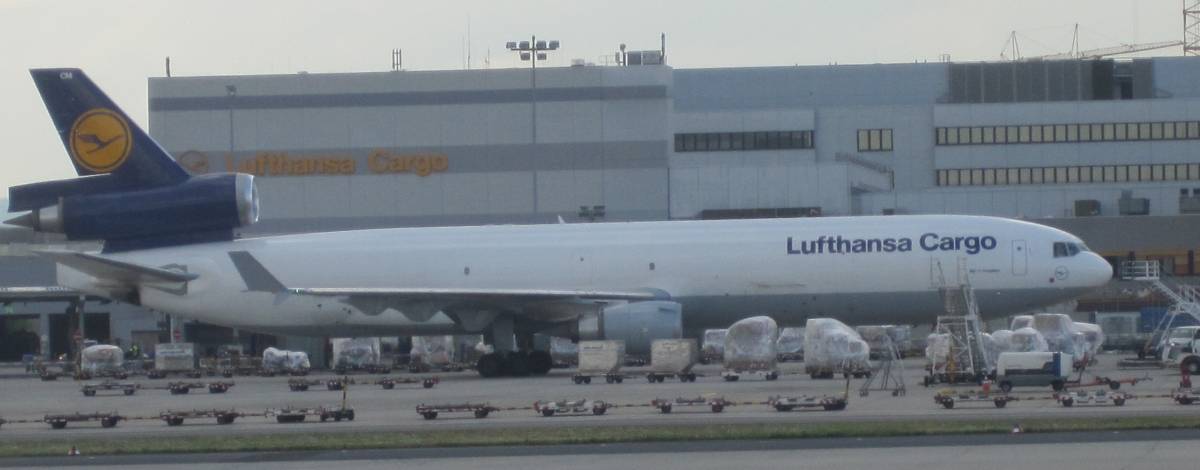
(photo: a Lufthansa Cargo MD-11F at Frankfurt International airport)

I my recent series about "Spain's empty airports", I wrote about the amount of public money that has been devoted to create or upgrade airports in a number of cities that are unlikely to ever generate enough traffic to justify this investment.

However, I came across a case that might be just the opposite: Zaragoza airport (ZAZ) has little activity, which is a bit striking when taking into account the size of the city it serves. If you look at the 2009 ranking of Spanish airports by number of passengers, ZAZ ranked 28th (out of 48), only above airports with very little traffic, such as Leon or Logrono, or those devoted to private aviation. However, Zaragoza is the 4th largest metropolitan area in Spain with a population of around 700,000. The city is also home to a major logistics center, that takes advantage of its position at a crossroads between the Ebro Valley and the Barcelona-Madrid route.

But it is precisely this strategic geographical position, at the intersection of major overland transport routes, including high-speed railway lines, that might have prevent the city from developing a larger airport. The problem is simply that it is too well connected with Barcelona and Madrid and it is also just close enough to these two cities for air travel not to be competitive (there is admittedly a ZAZ-MAD daily flight operated by Air Nostrum, but this is an almost exclusively connection flight targeting a really niche market). It is this availability of good rail and road links where the opportunity lies: it is already the third airport in Spain in volume of cargo, still far from the top two, but growing strongly.

It must also be taken into account that ZAZ is an airport with a mixed civilian and military use (it is also designated as one of the alternative landing places for the Space Shuttle). The Spanish Air Force keeps a strong presence at ZAZ and air traffic and some other service remain in military hands.

I wonder to what extent military use has acted as a constraint on the airport's civilian development. Surprisingly, at a time of exuberant spending at many Spanish airports, including in nearby Huesca, it seems that ZAZ was left out of the party...

Saturday, 29 January 2011

Aena goes retro to present its new airport investments in Spain

I was at Madrid's Fitur a few days ago. This is one of the largest tourism trade shows in the World and, as you might imagine, airlines and other aviation-related operators had a strong presence. Aena, the Spanish airport operator had a huge stand where it showcased their current and projected investments at some Spanish airports, such as Santiago de Compostela (SCQ) and Alicante (ALC). The new and projected terminals at these airports where presented with a miniature scale model, but what amazed me the most is the aircraft models they chose to fill them up...a joy for aviation history enthusiasts!...I do not believe we are going to see Lufthansa's Boeing 727 and TWA's Lockheed Superconstellation at Spanish airports anytime soon, though!


Is good old Connie making a comeback? ask Aena!


A nice retro aircraft model, a Lufthansa Boeing 727

Tuesday, 4 January 2011

Spain's empty airports (V): Burgos

This case is similar to Logroño (see previous post). The historical city of Burgos and its region is not without its tourist attractions, and to be fair, in spite of the economic crisis, Burgos airport (RGS) has shown some modest growth since its inauguration, in 2008. However, it has capacity for 500,000 passengers year, and with only a handful of regular flights, operated by Air Nostrum, to Barcelona, Palma de Mallorca and Paris-Orly, there are serious doubts about its capacity to generate enough demand on the long-term to make it economically viable.

The Spanish government invested €45.6 million on this facility, a figure that might be justified in cases where the airport helps break geographical isolation (it does not seem to be the case here) or brings significant benefits in the form of tourism income and local development. This might be a valid strategy for Burgos, but when taking a closer look at where did the growth in traffic come from, a rather different picture emerges, there have been some new charter flights operating at the airport, but they are flying local people out rather than bringing tourists in! So, in practice, the government is subsidising locals to go spend their money elsewhere...does not look like a sustainable growth strategy to me..

Sunday, 2 January 2011

Spain's empty airports (IV): Logroño

The Spanish region of La Rioja is famous worldwide for its great wines and its cellars attract numerous visitors every year, but few get there by plane if we are to judge by the traffic figures at the regional airport Logroño-Agoncillo. The airport was inaugurated in 2003, after an investment of €40 million, and after a few years of growth, peaked in 2007 at 56,000. It has been in falling since then and it currently stands at around 20,000 passengers per year.

There is hardly any regular traffic at the airport, only Air Nostrum operating a regional jet to Madrid-Barajas (MAD), but it is possible that there is not really a critical mass of passengers to sustain more flights, particularly when considering that land transport in the area is quite good (Logroño is in the middle of the Ebro Valley, a major communication line) and Bilbao airport and its much broader choice of flights and frequencies, is 1,5 hours away by car.

In the meantime the airport keeps losing €4,42 million a year, or €220 per passenger, and its debt stands at €52 million.

Tuesday, 28 December 2010

Spain's empty airports (III): León


In North-West Spain the city of León got a brand-new airport in 1999. There had been an airfield at León for decades, but the inauguration of the new facility and the opening of commercial services at León airport was a significant improvement on the accessibility of this historical city, that tracks its origins back to an old Roman fort, that had traditionally suffered from its remoteness and its distance to the country's main urban centers.

However, I got quite surprised to learn, this autumn, that the airport had just been enlarged. I had a look at the numbers and found out that the Spanish government had invested over €80 million at the airport during the last 6 years. This seems quite a large number taking into account the current amount of passengers the airport is handling, more so when some of the recent investments have been directed at increasing the airport's capacity. For example, LEN is now able to process 580 passengers per hour...but the total number of passengers last year was 94,282, that is around 250 passengers per day! And looking at the route network available from the airport it looks as if this traffic is well distributed along the year, in other words, it does not seem there are extreme demand peaks that require all this extra capacity (most routes are done by Air Nostrum using regional jets).

The expansion programme was implemented with an expectation of 500,000 passengers per year in 2012...but since reaching a peak of 160,000 passengers in 2007, traffic has only decreased since then. The fact that León is going to be connected to the Spanish high speed rail network in 2012, and it will then be within 2 hours travel time of Madrid by train will not help raise the airport's traffic figures...

Wednesday, 8 December 2010

By invitation: Roman from AirObserver on Airport privatization in Spain. What impact for Ryanair?

From today Roman from AirObserver is going to be guestblogging in this blog.
Roman runs AirObserver, a blog which covers airline news and especially European low cost market. He cooperate in Airpanorama project, a barometer which aims to offer the easiest way to compare most European low cost airline traffic figures.
He is also the author of an e-note about Ryanair business model.

Here is his first post in this space. Enjoy!

Airport privatization in Spain: What impact for Ryanair?


Picture: Barcelona airport new terminal

Spain's Prime Minister José Luis Rodríguez Zapatero has recently declared that his government plans to privatize 49% of AENA, the public authority in charge of Spanish airports. This privatization will start with two major airports in Spain: El Prat and Bajajas (other airports will come). Thus, probably in the hope to reduce public expenditure and to a certain extent, to improve airports management. Indeed, Zapatero’s government, who leads a struggling Spanish economy, hopes that the privatization would generate €9 billion.

A private management could impact Ryanair’s revenues:

In Spain, as all over Europe, Ryanair is massively subsidised. What I noticed in France is that each airport which gives money to Ryanair is actually managed by regional public bodies. Most of regional airports that are giving money to Ryanair are loss-making airports. Indeed, Ryanair always deals in the same way no matter the country: it brings in passengers, in return of important subsidies and free or lower airport fees. Consequently, small airport have more costs than revenues. Moreover, most of the time, the airport also has to hire, train, and pay all the required ground personnel. If you take this into account, you’ll understand why it might not be that profitable. However, when they realise that they are no longer able to deal with these high costs, it is too late, as the Irish airline doesn’t allow for contract changes.

My point here is that this kind of deal is only possible thanks to public support. Without public support, the airport won’t be able to survive, and would not agree to such deal. A private airport will only focus on revenues. In the light of this, we can conclude that, if the Spanish government decides to extend the privatisation movement to other small regional airports, the type of deals that Ryanair was able to conclude until now won’t be possible any more. Newly privatized airports will look at revenues first and not hypothetical future tourism revenues.

Airlines such as Vueling and Spanair have already given their support to this privatization, however full details have not been disclosed yet. Cataluña government for instance is waiting more detailed precisions from the Spanish government and Zapatero's still has to find potential investors.

Saturday, 4 December 2010

An analysis of Social Media during the recent Spanish air traffic controller's strike

At the time of writing these lines the effects of the Spanish air controllers unannounced and almost total strike are still being felt throughout the whole South-Western European airspace. This industrial action has forced the closure of the entire Spanish airspace and gravely affected that of the surrounding countries (Portugal, Morocco), the chaos at airports has been total, more so when the controllers' walk-away has coincided with the start of a five day holiday in Spain. The Spanish government has had to recur to extreme measures such as declaring the "state of alert" and putting the ATCs under military control.

It is not my intention here to delve into the causes of the crisis or on the chronology of the events , but to look at how the different actors of the crisis have been using social media to get their message through.

The role of social media during crisis has become more and more important and this crisis. I find that the current situation has many points in common with the recent volcanic-ash episode that forced the closure of practically all European airspace. As I explained in a previous post, the recent Social Media for Airlines conference, dissected the response of airlines and organisations to sudden short-term disruption of air traffic. In that case, the crisis was a catalyst that pushed organisations to embrace social media. And this case is no different...

In fact when the crisis started all the social media artillery seemed to be on the side of the air traffic controllers, that had their own blog and at least two Facebook fan pages presenting their point of view (this one seems to be the main one, but has much less activity than this other page that is focused on the current conflict...This put them automatically on the spotlight, with thousands of angry people directing their anger at these platforms. The Spanish ATC Twitter account was replying to comments and actively tweeting until Saturday morning when it seems that it stopped tweeting (the deluge of mostly negative comments was possibly too much for whomever was managing this account)

The government side did not have this sort of social media channels in place when the crisis started to unfold. Spain's airport and air traffic management organisation (Aena) had an institutional website that was in no way suited for this task, providing just some informative notes and a contact telephone. There was no Twitter account to speak of until Saturday mid-morning (more than twelve hours after the strike had started), when the official Aena Twitter account was opened. The first time I checked it out it had only two followers and they had not even had the time to upload an avatar picture for their Twitter profile. To their credit however, they got up to speed fairly quickly, I checked it again 15 minutes later and it had already over 1000 followers, by early afternoon they had reached 3000 and it was tweeting a constant flow of information on Spain's airport network situation. Besides English and Spanish it had also streams in the other official languages of Spain: Catalan, Basque and Galician. We hope that, as in the volcano crisis, this level of engagement with the public will remain going future.

It is unusual for events taking place in a mid-sized non-English speaking country with little Twitter penetration to make it to Twitter's global trending topics, but at some times today the Spanish airport chaos made it to the top of the list, for example: #controladores, #barajas,

Other hashtags you can monitor to follow the events are:
#aena #huelga #controladores #prat #estadodealarma #DGAC #Spanishstrike

most of the tweets related to these hashtags are in Spanish, but quite a few are in English too.

And obviously Eurocontrol, was also informing via Twitter, by the way, it must have been a complicated day for them since there were not only issues in Spain but also closures and disruption due to snow at Schiphol (AMS), Paris-Orly (ORY) and UK airports such as London-Gatwick (LGW).

Other unexpected side actors of this crisis have been Hotel Auditorium, a huge hotel next to Barajas airport with its own twitter account as it is in this hotel that air traffic controllers were holding a meeting on Friday night while the crisis was at its peak. They required police protection after the ATCs were discovered by a number of distressed passengers that had been hosted at the hotel after their flights got cancelled (as a side note, I also had the chance to stay at Hotel Auditorium earlier this year after my flight was cancelled due to an air traffic controller's strike in France).

I have also seen the potential of Twitter as a tool to arrange alternative travel plans, for example, I have spotted several people on Twitter looking for car-sharing arrangements to travel by road to their destinations as well as some online car-sharing companies, such as Comuto and Amovens, promoting their services.

And other online services that thrive with public attention in days like this are the air traffic live monitoring sites, such as FlightRadar24 or Radarvirtuel, that I already used, with spectacular results, during the volcanic-ash crisis.


Snapshot of Radarvirtuel around 7pm CET, air traffic returns slowly to Spanish skies, spot the empty region in Central Spain and around Madrid airport (MAD).

Wednesday, 1 December 2010

Some thoughts on the upcoming Spanish airports privatization


The Spanish government has announced that it is planning to sell part of the Spanish airports operator, AENA. This is a move that had been on the table for quite a while (with particularly strong pressure coming from Catalonia, where the current centralized airport management structure is widely perceived as detrimental to the development of Catalan airports) but the Spanish government had always resisted this move.

Even today's announcement was not very rich in details, it is not clear to me how this sale is going to be made: looks like AENA keeps all the airports but might allow other companies to manage some of them, namely Barcelona and Madrid, but it is not clear how, what level of implication will the private sector have given that the government will keep a majority? is there going to be a public offering? How this move is going to affect the way Spanish airports do route development?

Many questions to which we are will try to give an answer in upcoming posts...!