Pages

Showing posts with label Social Media. Show all posts

Wednesday, 6 March 2013

KLM Must-See map: your airline gets your friends to help you plan your next trip

It has not even been two weeks since last time we spoke about KLM's social media activities and yet...here we are again, talking about another really cool campaign by the Dutch airline.


This time is about inviting your friends to provide tips about the next destination you are flying to (where to eat, what to see...). Basically see who of your friends has been there and then aggregate these recommendations on a "Must See Map" that KLM will ship to you...in paper format!

This is not the first time that someone tries to crowdsource a destination guide, but the paper format adds an interesting element, particularly because it appears to be shipped for free...is KLM going to be doing it undefinitely? would be interesting to see the ROI of this campaign if postal costs add to much.

But in any case, KLM has got people talking about it (we are not a exception!) and this matters too!

Saturday, 23 February 2013

KLM wants you to run your own airline with its latest Facebook game

KLM continues to rock with its social media activities. Its latest Facebook initiative has aviation enthusiasts all around the World already salivating...5000 likes and over 150 comments on Facebook and the game hasn't launched yet!


As someone who grew up playing Railroad Tycoon, I could not resist the allure of running my own airline (at least that's what it appears to be promising!) and already signed up to get notified once the game is live.

Looking at these fantastic vintage aircraft my guess is that KLM's game is also going to leverage its historical heritage (KLM is actually the oldest airline still operating anywhere in the World!). Something I certainly don't mind...!


Thursday, 6 September 2012

Unhappy Ryanair passenger becomes social media rockstar...but does it matter? (post with a bonus: a video of Air India's first Boeing 787!)


If there is an airline with a seemingly infinite capacity to produce headlines, this is Ryanair. I mentioned some of its past stunts in this blog, however at some point I lost my interest in this sort of stories...everyone has a personal Ryanair horror story!... I went, myself, from being a loyal and happy customer to not flying with them anymore after I had a bitter "disagreement" with one of their ground staff about the best way to re-pack hand-luggage items, she might have got her commission, they lost me as a client, but this is a story for another post...)

This time the "hero" of Ryanair's critics is Suzy McLeod, a Ryanair passenger from Alicante to Bristol, who was charged €300 for not having printed her family's boarding passes beforehand. Suzy went to Ryanair unofficial page on Facebook and posted the following comment:  

“I had previously checked in online but because I hadn't printed out the boarding passes, Ryanair charged me €60 per person! Meaning I had to pay €300 for them to print out a piece of paper! Please ‘like’ if you think that's unfair.” 

The response was huge: nearly 400,000 likes and over 18,000 comments for a single post. Quite a feat!

And an even a greater feat to draw the attention of Michael O'Leary himself, that did not miss the chance to express his thoughts about her and this whole affair... in his own syle, of course!

But does this matter? Despite many airlines making a genuine effort to get into social media (in this blog I sometimes highlighted some of the social media stars of the airline industry) the answer is far from straightforward. Or at least, it might not matter if you are Ryanair...the Irish airline has consistently outperformed its industry peers, despite having no social media activity, a horrible (sometimes buggy) website in terms of usability and tons of bad PR every day. Social media might actually be less important for the success of an airline than, we, hyper-connected people tend to think...or this is what this analysis points out.

(oh! I forgot to say: there is now a Ryanair iPhone and iPad app, you need to pay for it, of course!)

Enough of Ryanair for now...on another totally separate note, Boeing continues with its stream of Dreamliner deliveries, and has set up this cool-looking website so that you can track all the deliveries. Today it has has been the turn of Air India, and to celebrate the occasion, Boeing has put together this interesting video about the making of Air India's first 787. Enjoy!

Thursday, 14 June 2012

More on social seating for airlines: Satisfly takes off with airBaltic

Not long ago I wrote about the phenomenon of social seating. Several airlines and start-ups are exploring different ways to develop and implement this type of service.

While it is not clear yet what model is going to prevail, one of the pioneers in this field, Satisfly, led by Sergio Mello, has reached a significant milestone and announced its first airline partnership, with airBaltic.

The Riga, Latvia-based carrier is usually quite keen to implement innovative marketing initiatives, it is a regular on Airlinetrends' rankings of most innovative airlines, so it is not totally unexpected that it has jumped on the social seating band-wagon, with its airBaltic SeatBuddy service.

What I find interesting about Satisfly's system is that it is not airline-specific, like similar airline social seating schemes developed by KLM and Malaysia Airlines, and also that, by partnering with the airlines, it can be put in front of the travelers every time they interact with the airline, during booking or online check-in. The concept might still take some time to take-off, and might not be for everyone, but as social networks become more entangled with everyone's daily activities I think social seating might end up being one more feature (a segment of) passengers will come to expect when they book a flight.

Thursday, 10 May 2012

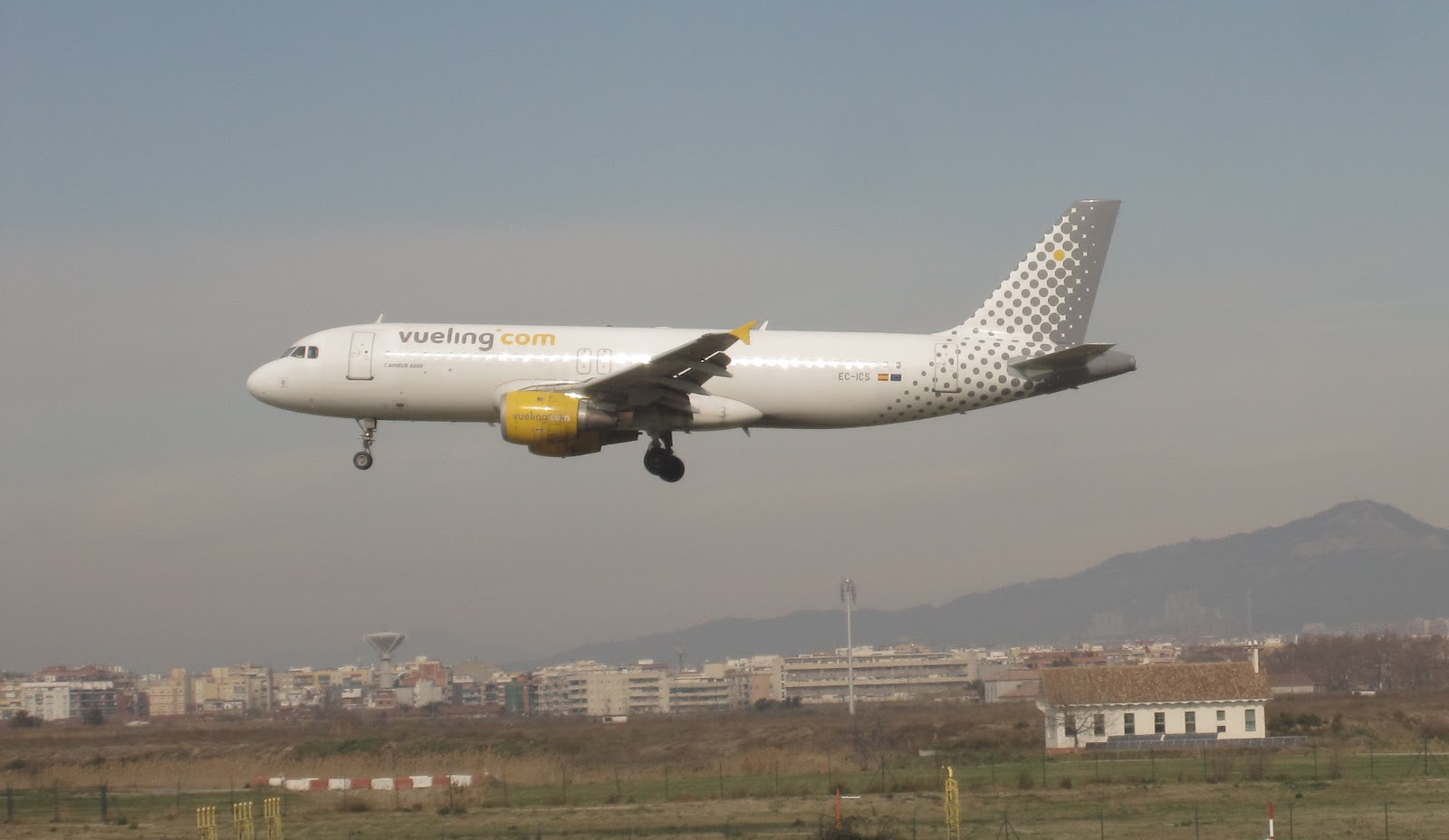
Latest on airline social media marketing: Vueling leveraging the Instagram craze

Your Instagram pictures could soon be on a Vueling A320 like this one

It is hardly news that airlines, as most consumer-oriented companies, are embracing social media to connect with the public, sell tickets or sort out crisis. Some go the extra-mile and even develop their own innovative applications exploring the social travel space (whether successfully or not is another matter, the jury is still out)...But the key element here is that the hyperconnected world we live in provides also a platform to test new marketing and leverage user-generated content...I mentioned in a previous blog post that "visual" is the word of the day and the recent billion-dollar sale of Instagram to Facebook proves the point...

So what best than try riding the Instagram wave? This is what Vueling is doing with its latest campaign, the Vueling Air Gallery (running on Facebook, of course!)...take an Instagram picture from one of Vueling's destinations, tag it #vuelingairgallery and get the public to vote for it (obviosuly the goal is to make it viral by asking your friends to vote for your picture). One of Vueling's Airbus A320s is going to be painted with the 200 best pictures and the best 50 Vueling instagrammers (chosen by some judges) are going to get free flights too..

To be fair, this is not the first time that an airliners has been decorated this way, KLM already painted one of its aircraft with its fan's Facebook pictures styled as blue Delft porcelain tiles...but it is a nice and engaging initiative nonetheless...I am actually wondering why we do not see more campaigns along these lines.

Friday, 13 January 2012

Airline social seating is here...to stay

If the previous post was featuring three great airline blogs, today is the turn of four new services that bring the principles of social shopping to one of the most important aspects of the airline passenger experience: seat allocation.

Once upon a time airline passengers were always asked whether they prefered window or aisle (not many people seem to like the middle seat!), the not so young might even remember when they had the choice of smokers/non-smokers...well, to be fair, many passengers still get the choice, but then came the low cost carriers and the era of unassigned seating, and the pay-to-choose-your-seat model...

And now a bunch of tech startups and a few airlines are starting to bring some zest back to seat selection...how? by applying the principles of social shopping and leveraging the power of social networks: when on a flight, wouldn't it be better to seat next to those you are more likely to have an affinity with you and have a more enjoyable flight?

Here are four initiatives in this field that have popped up recently, two are driven by specific airlines that seem to have developed it in-house, whether the other two are solutions provided by independent technology startups, and, therefore, not tied to any specific carrier.

1) Planely integrates with other platforms and applications, such as Tripit, Facebook and Linkedin, you disclose where are you flying to and Planely tells you who are you going to be travelling with, you can then connect and try to seat next to those you would like to speak with during the flight.


2) Satisfly is based on the concept of "intelligent seating", when you sign up you are asked a number of details about yourself, part of this can be filed automatically through integration with your existing social networks, additionally Satisfly also asks you for your flight mood (business talk, easy chat, work, relax) and neighbour profile (a number of questions about your preferences about potential seat neighbours, such as age or language spoken), Satisfly also collects information such as meal preferences or frequent flier programmes. The key element here is that Satisfly works alongside airlines, so once all these information is processed through its own patent-pending technology, the airline is going to be able to assign you a seat neighbour based on your preferences.


3) Malaysia airlines made the headlines a few months ago when it released the first airline Facebook app that allows booking directly on Facebook, without leaving the app. One of the interesting aspects of this app is the ability to see whether  your Facebook friends are on the same flight and select seats accordingly (the system is opt-in only, so no risk of unsolicited encounters if you do not wish to be found)


4) KLM, once more a pioneer in the use of social media, is planning to release a service that looks for similarities and potential compatibilities in the passenger's social media profiles and activity and then allocates seating accordingly. Whereas not many details are available about this new initiative it sounds like an interesting idea, although, obviosuly not for everbody (it will need to be opt-in only), a project worth keeping an eye on!


Wednesday, 11 January 2012

Three airline blogs that stand out

Every social media manual will tell you that having a corporate blog is a must. Opening a blog is actually not that difficult (this blog is proof of this :-)) but doing it in a nice and engaging way is another story, particularly when we are talking about "corporate" blogs...this is why I would like to highlight a few examples I came across of airline blogs that, in my opinion, are really outstanding:

1) KLM
The Dutch carrier has been a pioneer in the use of social media tools and its corporate blog could not be less. KLM's blog has a nice personal touch, presenting stories from all corners of KLM's network, and their Facebook page is also a must for any aviation history enthusiast, capitalizing on the airline's long history as the Dutch flag carrier and a real commercial aviation pioneer (KLM was founded in 1919, which makes it the oldest airline in the World still operating!). You can find some great pictures that will help you imagine how the passenger experience was in those early days of aviation!


2) Air New Zealand
Air NZ has been delighting observers of airline marketing for quite some time, with simple product innovations that have, nevertheless, the potential to improve considerably the passenger experience, funny aircraft safety videos and cute furry mascots...and Air New Zealands blog is up to what you would expect of such as creative airline...The Flying Social Network does not look like one more corporate blog, it's got a clean design, interesting articles and nice visuals...I do not tend to follow corporate accounts, but I made an exception with this one!


3) Finnair
Well, this is a classical one, and the Quality Hunters initiative got already its space in this blog, so I will point you towards my post of 2010: "Finnair, rethinking quality"

Wednesday, 16 November 2011

Iberia wants you to Fly Around the World with its new Facebook game


Gamification is the word of the moment in social media and airlines are starting to experiment with it. Spanish flag-carrier Iberia, now part of the IAG Group, is the latest airline to experiment with this channel in order to generate buzz and follower engagement.

Iberia has just launched "Flying Around the World", a Facebook game here users can accumulate "hours of flight" by answering questions related to the airline and its products and services, the goal is to accumulate these hours of flight, you start as a co-pilot on short haul flights and become "Long-haul Pilot" (Comandante de largo radio), you can answer up to five questions per day and each correct answer gives you "flying hours".

Each question is labeled as a "flight", for example to complete a Madrid-Milan flight I had to answer how Iberia's last minute discounted online booking service is called (answer "Los que Corren, Vuelan" ("those that run, get to fly"). Iberia will be progressively adding new flight sectors over time,as the goal is to keep users engaged. As any good social media "trap", you get extra points for liking Iberia's Facebook page and leaving them your email (not that they hadn't it already!).

The more "zones (Europe, Latin America, etc.) you complete, the more chances you have to win in the draw that takes place at the end of the contest (15th December). Iberia will throw in "special" sectors to cover from time to time, as a chance to accumulate more "flight hours".

The prize? You guessed it!
4 free flights for the select few to any of the 24 long-haul destinations on Iberia's network (or "Avios" Iberia's, and IAG's, frequent flier "currency")

I was playing around with it a little bit, an, although the mechanics of the game are not particularly revolutionary, it is a nicely executed project that makes for some good light entertainment while you recall the extent of Iberia's network...I'll let you know in case I win!

Friday, 25 February 2011

Cool KLM commercial

As promised in a previous post, here is another imaginative airline commercial, this time from KLM. It is remarkable how KLM seems to be one of the airlines that best understand the power of new media when it comes to marketing and have not hesitated to experiment: we have seen it in situations of crisis as well as on a more pleasant context. Keep it on!


(h/t @brandedskies)

Monday, 20 December 2010

How Twitter becomes the essential crisis-management tool when European airports are in chaos

It is starting to become the norm: volcanoes, air traffic controllers strikes and, like every winter, snow, snow and more snow...

And Twitter is steadily becoming the number one resource for stranded passengers, airlines, infrastructure managers, transport authorities and onlookers to assess the situation and communicate with each other. At this point in time no one beats Twitter and its capacity to engage in real time with multiple players. Want further proof? Look at this snapshot from KLM's Facebook page, taken amidst the snow-related air traffic disruption of this weekend:


The power of real time info


Another issue up for discussion is why UK airports are so sensitive to adverse weather conditions, it would be foolish to expect the same level of readiness in the face of snow than, for example, Finland, but the UK is not located precisely in the tropics, and we know there are snow storms every winter, given the large flux of people transiting through UK airports, even if problems last for just a few days, the amount of disruption is huge! wondering whether are there are better ways to cope with snow...


Does it need to be like this every winter?

Saturday, 18 December 2010

KLM does an amazing job using Twitter to rebook stranded passengers

One of the most interesting (and useful!) uses of social media during the recent snow-related air traffic disruption in Europe has been that of Dutch airline KLM, using Twitter to communicate with passengers, not only to inform and receive feedback but also to take specific action to mitigate the effects of the crisis.

KLM (@klm on Twitter) started taking rebooking requests from stranded passengers and notifying them of their new schedules.

Here you can find some examples:


The procedure is not without its faults, and one of them is privacy, private information and details of flight itineraries were being aired on Twitter for everyone to see.

When I was monitoring the KLM stream to write this post, I could even see a personal acquaintance tweeting his details to the airline, then a few minutes after that, KLM confirming new flight details to him, but with a typo, I quickly pointed this error to the airline and then got in touch with my friend too in order to let him know...this is absolutely powerful stuff! I was participating in the rescheduling of a flight plan from my own desk miles away from the airport where all this was taking place!

This obviously raises some interesting questions about privacy: as I could see what was going on, so did millions of other people...this is the reason KLM was also asking passengers to DM (direct message) the company (also through Twitter) in order to make communications private, however, you can only DM people on Twitter if you follow each other, something easy to do but that requires some coordination.

In any case, it seemed that people were valuing more the convenience of being able to sort out their travel schedule than any lack of privacy. In any case, and I guess in order to avoid any legal or security problems, KLM posted a note on its Facebook profile shortly after announcing that it was going to remove all references to private information from its Twitter stream...


In summary, a curious situation and, setting legal implications aside, a possible case study of the trade-off, privacy vs. convenience, that people have to do when engaging in conversation in social networks: if you keep too much information private, your presence in social networks loses its "raison d'être", as you will have problem sharing and communicating, on the other hand, it is necessary that you have a choice on what information you keep to yourself...

While I am finishing to write this post I realize that even Twitter has some limits:


But, in any case, kudos to KLM for understanding the power of Twitter and going the extra-mile in customer service!

What is sure is that air travel disruption is proving a test-ground for social media in its crisis-management function!

Thursday, 16 December 2010

Estonian Air experiences the power of Groupon-style promotions


When we speak about social media in the air travel sector and the new channels airlines are opening to engage with their clients we usually think about Twitter, Facebook...but what's been really hot in the internet scene this last year?...coupons! think Groupon and its legion of copycats. Basically, these sites offer a product or service every day at a very discounted rate, the catch is that this deal-of-the-day only applies if a certain number of people sign up for the offering. The concept has proven to be so wildly successful, that 2-year-old Groupon is rumored to have had a $6B acquisition offer from Google!

To see what happens when you apply the coupon concept to air travel we have to go to one of Europe's smallest and most peripheral markets for air travel: Estonia. And it was a resounding success!

Estonian Air, a SAS subsidiary and flag-carrier of the tiny, but internet-savvy, Baltic nation had to stop selling discounted tickets through Cherry.ee when sales started going through the roof, they were planning to sell 2,500 tickets and by the time the promotion stopped more than 6,500 had already been sold. It might not sound like a huge number to some, but if you take into account that Estonian Air has a small fleet made of just 2 Boeing 737-300, 3 Boeing 737-500 and 2 Saab-340 turboprops, you can see how this promotion successfully sold a considerable share of its available capacity...I am sure many other airlines throughout Europe and the rest of the World are looking attentively to the North-Eastern shores of the Baltic!

Monday, 6 December 2010

Thanks everyone!

When I started writing my previous post about social media use during the Spanish airport crisis, the events were still unfolding and I could not imagine this would be, by a large margin, the most popular story in this blog so far.

Every new crisis or unexpected event becomes a test-ground for social media and further proof of the growing importance of these new communication channels in crisis management. I imagine this is one of the reasons why so many people from around the World visited this blog and took an interest on how social media was put to use during this crisis of first magnitude. I was particularly delighted that one of the World's top airline marketing blogs, Simpliflying, re-published my article in its entirety, thus giving me the chance to make my analysis available to its well-qualified and global public.

Here is the link, and do not forget to visit the rest of the Simpliflying blog. It's totally worth it!

Saturday, 4 December 2010

An analysis of Social Media during the recent Spanish air traffic controller's strike

At the time of writing these lines the effects of the Spanish air controllers unannounced and almost total strike are still being felt throughout the whole South-Western European airspace. This industrial action has forced the closure of the entire Spanish airspace and gravely affected that of the surrounding countries (Portugal, Morocco), the chaos at airports has been total, more so when the controllers' walk-away has coincided with the start of a five day holiday in Spain. The Spanish government has had to recur to extreme measures such as declaring the "state of alert" and putting the ATCs under military control.

It is not my intention here to delve into the causes of the crisis or on the chronology of the events , but to look at how the different actors of the crisis have been using social media to get their message through.

The role of social media during crisis has become more and more important and this crisis. I find that the current situation has many points in common with the recent volcanic-ash episode that forced the closure of practically all European airspace. As I explained in a previous post, the recent Social Media for Airlines conference, dissected the response of airlines and organisations to sudden short-term disruption of air traffic. In that case, the crisis was a catalyst that pushed organisations to embrace social media. And this case is no different...

In fact when the crisis started all the social media artillery seemed to be on the side of the air traffic controllers, that had their own blog and at least two Facebook fan pages presenting their point of view (this one seems to be the main one, but has much less activity than this other page that is focused on the current conflict...This put them automatically on the spotlight, with thousands of angry people directing their anger at these platforms. The Spanish ATC Twitter account was replying to comments and actively tweeting until Saturday morning when it seems that it stopped tweeting (the deluge of mostly negative comments was possibly too much for whomever was managing this account)

The government side did not have this sort of social media channels in place when the crisis started to unfold. Spain's airport and air traffic management organisation (Aena) had an institutional website that was in no way suited for this task, providing just some informative notes and a contact telephone. There was no Twitter account to speak of until Saturday mid-morning (more than twelve hours after the strike had started), when the official Aena Twitter account was opened. The first time I checked it out it had only two followers and they had not even had the time to upload an avatar picture for their Twitter profile. To their credit however, they got up to speed fairly quickly, I checked it again 15 minutes later and it had already over 1000 followers, by early afternoon they had reached 3000 and it was tweeting a constant flow of information on Spain's airport network situation. Besides English and Spanish it had also streams in the other official languages of Spain: Catalan, Basque and Galician. We hope that, as in the volcano crisis, this level of engagement with the public will remain going future.

It is unusual for events taking place in a mid-sized non-English speaking country with little Twitter penetration to make it to Twitter's global trending topics, but at some times today the Spanish airport chaos made it to the top of the list, for example: #controladores, #barajas,

Other hashtags you can monitor to follow the events are:
#aena #huelga #controladores #prat #estadodealarma #DGAC #Spanishstrike

most of the tweets related to these hashtags are in Spanish, but quite a few are in English too.

And obviously Eurocontrol, was also informing via Twitter, by the way, it must have been a complicated day for them since there were not only issues in Spain but also closures and disruption due to snow at Schiphol (AMS), Paris-Orly (ORY) and UK airports such as London-Gatwick (LGW).

Other unexpected side actors of this crisis have been Hotel Auditorium, a huge hotel next to Barajas airport with its own twitter account as it is in this hotel that air traffic controllers were holding a meeting on Friday night while the crisis was at its peak. They required police protection after the ATCs were discovered by a number of distressed passengers that had been hosted at the hotel after their flights got cancelled (as a side note, I also had the chance to stay at Hotel Auditorium earlier this year after my flight was cancelled due to an air traffic controller's strike in France).

I have also seen the potential of Twitter as a tool to arrange alternative travel plans, for example, I have spotted several people on Twitter looking for car-sharing arrangements to travel by road to their destinations as well as some online car-sharing companies, such as Comuto and Amovens, promoting their services.

And other online services that thrive with public attention in days like this are the air traffic live monitoring sites, such as FlightRadar24 or Radarvirtuel, that I already used, with spectacular results, during the volcanic-ash crisis.


Snapshot of Radarvirtuel around 7pm CET, air traffic returns slowly to Spanish skies, spot the empty region in Central Spain and around Madrid airport (MAD).

Sunday, 21 November 2010

My insights from the recent Social Media for Airlines Conference

I recently had the chance to attend some of the sessions of the Social Media for Airlines Conference that took place in London, organised by Simpliflying in association with Airline Business and Flight Global and chaired by Shashank Nigam and Mary Kirby (aka RunwayGirl). I would like to share some of the insights I got from this interesting conference (I know, it was nearly two months ago, but this site's redesign plus some other projects that came up left me little time to write a few lines about it!) where I had the chance to meet other bloggers and social media experts that focus on airlines and air travel, such as Paula Berg, Sven Solterbeck, Sergio Mello and Karlis Smiltens.

The sessions I attended were very illustrative of how social media has made a quick foray in the airline scene (and it is here to stay!) sometimes driven by external events beyond the control of airlines. A case in point was the Icelandic volcanic ash-cloud, that grounded almost all European airlines for a number of days last spring.

This event was a watershed in the social media strategy and use for many airlines and aviation related institutions. It was the dramatic disruption caused by the Icelandic volcano what forced these companies to start using social media channels to engage with their stranded clients.

At the start of the crisis some institutions did not have any proper structure to deal with social media (or to interact with their own clients in such a massive scale) and it was mainly thanks to the effort (and sleepless nights) of a bunch of dedicated professionals, such as Aurelie Valtat at Eurocontrol or Christian Kamhaug, of SAS were not only able to improvise and sustain an active presence in the main online social networks, but to set up the basis of what has become a successful long-term social media strategy...So, at least something positive came out of that episode!

I am really looking forward to the next conference where I am sure that, given the unstoppable growth of online social networks and the increasing number of ways in which airlines are tapping them to engage with their potential customers, lots of interesting new case studies will be presented!

Wednesday, 3 November 2010

Finnair rethinking quality

A few days ago I was checking options for my upcoming trip to Russia and I ended up at Finnair’s website. The first thing that caught my attention is the Twitterish interface that Finnair has come up with.


The central part of the screen has actually been taken over by the "Quality Hunters". This is an initiative Finnair has come up with to highlight its commitment to quality. The “quality hunters” are actually independent professionals from all over the World that have been tasked with traveling the globe during a whole month reporting on their experiences on quality wherever they go, be it the flights, airports or destinations.

The innovation is not that these "quality hunters" will be blogging and communicating their experiences along the way, engaging in open dialog with the public and making extensive use of twitter, but that Finair is giving them the main section of their corporate website. Some of the posts have little to do with the airline itself, but when they do write about Finnair I like the fact that they are sharp and straight to the point, like for example this post by "quality hunter" Christina Lund Sørensen about her less-than-satisfactory eating experience on-board several of Finnair's aircraft. It is a much welcome exercise of transparency on Finnair's side that the bloggers are allowed and even encouraged to post even when they do not have positive things to say.

The quality hunting experience has even its own site, that adds to Finnair's well designed main corporate website and where you can find all sorts of background information about the quality-hunting bloggers and their findings. I would say that overall it is a very good idea, with an even better execution!