If the previous post was featuring three great airline blogs, today is the turn of four new services that bring the principles of social shopping to one of the most important aspects of the airline passenger experience: seat allocation.
Once upon a time airline passengers were always asked whether they prefered window or aisle (not many people seem to like the middle seat!), the not so young might even remember when they had the choice of smokers/non-smokers...well, to be fair, many passengers still get the choice, but then came the low cost carriers and the era of unassigned seating, and the pay-to-choose-your-seat model...
And now a bunch of tech startups and a few airlines are starting to bring some zest back to seat selection...how? by applying the principles of social shopping and leveraging the power of social networks: when on a flight, wouldn't it be better to seat next to those you are more likely to have an affinity with you and have a more enjoyable flight?
Here are four initiatives in this field that have popped up recently, two are driven by specific airlines that seem to have developed it in-house, whether the other two are solutions provided by independent technology startups, and, therefore, not tied to any specific carrier.
1) Planely integrates with other platforms and applications, such as Tripit, Facebook and Linkedin, you disclose where are you flying to and Planely tells you who are you going to be travelling with, you can then connect and try to seat next to those you would like to speak with during the flight.
2) Satisfly is based on the concept of "intelligent seating", when you sign up you are asked a number of details about yourself, part of this can be filed automatically through integration with your existing social networks, additionally Satisfly also asks you for your flight mood (business talk, easy chat, work, relax) and neighbour profile (a number of questions about your preferences about potential seat neighbours, such as age or language spoken), Satisfly also collects information such as meal preferences or frequent flier programmes. The key element here is that Satisfly works alongside airlines, so once all these information is processed through its own patent-pending technology, the airline is going to be able to assign you a seat neighbour based on your preferences.
3) Malaysia airlines made the headlines a few months ago when it released the first airline Facebook app that allows booking directly on Facebook, without leaving the app. One of the interesting aspects of this app is the ability to see whether your Facebook friends are on the same flight and select seats accordingly (the system is opt-in only, so no risk of unsolicited encounters if you do not wish to be found)
4) KLM, once more a pioneer in the use of social media, is planning to release a service that looks for similarities and potential compatibilities in the passenger's social media profiles and activity and then allocates seating accordingly. Whereas not many details are available about this new initiative it sounds like an interesting idea, although, obviosuly not for everbody (it will need to be opt-in only), a project worth keeping an eye on!
Friday, 13 January 2012
Wednesday, 11 January 2012
Three airline blogs that stand out
Every social media manual will tell you that having a corporate blog is a must. Opening a blog is actually not that difficult (this blog is proof of this :-)) but doing it in a nice and engaging way is another story, particularly when we are talking about "corporate" blogs...this is why I would like to highlight a few examples I came across of airline blogs that, in my opinion, are really outstanding:
1) KLM
The Dutch carrier has been a pioneer in the use of social media tools and its corporate blog could not be less. KLM's blog has a nice personal touch, presenting stories from all corners of KLM's network, and their Facebook page is also a must for any aviation history enthusiast, capitalizing on the airline's long history as the Dutch flag carrier and a real commercial aviation pioneer (KLM was founded in 1919, which makes it the oldest airline in the World still operating!). You can find some great pictures that will help you imagine how the passenger experience was in those early days of aviation!
2) Air New Zealand
Air NZ has been delighting observers of airline marketing for quite some time, with simple product innovations that have, nevertheless, the potential to improve considerably the passenger experience, funny aircraft safety videos and cute furry mascots...and Air New Zealands blog is up to what you would expect of such as creative airline...The Flying Social Network does not look like one more corporate blog, it's got a clean design, interesting articles and nice visuals...I do not tend to follow corporate accounts, but I made an exception with this one!
3) Finnair
Well, this is a classical one, and the Quality Hunters initiative got already its space in this blog, so I will point you towards my post of 2010: "Finnair, rethinking quality"
Labels:
Air New Zealand,
Finnair,
KLM,
Marketing,
Social Media
Saturday, 7 January 2012
Is there a lack of innovation in the aviation industry?
Ready to take another leap?
The other day a tweet from aviation social media expert Shashank, from Simpliflying caught my attention, it contained a quote from Splatf, a tehcnology blog that I also follow, it stated "The airplane industry needs its iPhone".
If you go to the article in question you will see what this means: there has been little radical innovation in the aircraft industry in the last few decades, with the two main manufacturers (plus some smaller ones) basically delivering incremental improvements of aircraft types that, in their basic form, have been in service for a really long time. The first Boeing 737 first flew in 1967!
Of course, the Boeing 737s that are being built today are superior in many ways to those earlier versions, but it could be argued that they are not "revolutionarily different". There has not been a leap as significant as the one that, for example, the Boeing 707 represented over the previous piston-engined planes!
This is not the only voice I hear recently warning that the rate of technological innovation has slowed downed over the last few decades, not only in aviation but in other industries too.
You could say the composite materials that make most of the recently released Boeing 787 Dreamliner certainly qualify as an important innovation, but, despite all these improvements, which I, as an aviation enthusiast, appreciate, might be far from evident to the average airline passenger and, to the non-expert eye, a Boeing 787 looks unremarkably similar to a 1970s airliner.
This is not the only voice I hear recently warning that the rate of technological innovation has slowed downed over the last few decades, not only in aviation but in other industries too.
You could say the composite materials that make most of the recently released Boeing 787 Dreamliner certainly qualify as an important innovation, but, despite all these improvements, which I, as an aviation enthusiast, appreciate, might be far from evident to the average airline passenger and, to the non-expert eye, a Boeing 787 looks unremarkably similar to a 1970s airliner.
A number of revolutionary concepts have been put forward in the last few years but the chances of them becoming a relity in the foreseeable future are, a priory, very slim. And it is understandable why: developing a new generation of airliners is such a complex, risky and capital-intensive task (we have got a taste of what this means with the A380 and Boeing 787 production delays) that it is no wonder that Boeing and Airbus prefer to squeeze further all improvements they can from their existing aircraft portfolio, and this is why we have the Airbus 320 Neo and the Boeing 737 Max, which I am sure are superb airplanes, but delivering just marginal improvements over the current family of aircraft.
Plus, why would you create an entirely new aircraft that renders most of your client's fleets obsolete in one go when you have a comfortable hold of this market? remember what happen when the Royal Navy introduced the first Dreadnought? Almost all its fleet became obsolete overnight and startup navies (Germany) spotted the chance to catch up fast.
Well, they risk being disrupted, such as Nokia got disrupted by Apple. and any such breakthrough is likely to come from outsiders...Will it be mass-market hypersonic flight? or the flying car?
Source: Wikipedia
Who knows?...by definition, breakthroughs are impossible to predict...
What do you think? Where is aviation's next big leap going to come from?
Labels:
Airbus NEO,
aircraft,
Boeing,
Boeing 737 Max,
Boeing 787,
innovation,
Orbital flight
Friday, 6 January 2012
The long-awaited European long-haul low cost revolution
Are low cost long-haul airlines finally coming to Europe (to stay)?
Well, to be fair, long-haul low cost airlines have operated in Europe before, but for a number of reasons they have never been able to consolidate.
From the early days of pioneering Laker Airways, back in the seventies, to the more recent Oasis Hong Kong (not to be mistaken for Oasis Airlines, a Spanish charter airline that ceased operations in the mid-nineties!), that flew Boeing 747s between London and Hong Kong, and Air Madrid, that collapsed in the run up to a Christmas holiday leaving thousands of passengers stranded, all attempts to establish the low cost long haul model in Europe have been met by failure so far...No wonder that with this track record Ryanair's rumored long haul expansion, expected to start with flights to New York Islip, hasn't materialized yet! And it is not only Europe, we find a similar situation in the US (I do not count transcontinential routes as long-haul).
The economics of long haul low cost aviation are certainly more challenging than those of the short haul variant: aircraft can not do multiple rotations, there are few long haul markets whose traffic is dense enough to support point-to-point operations without the support of a feeder, it is more difficult to take part of the market from alternative modes of transportation such as road or train (basically most of those that can or would fly are already doing so) and also most routes outside Europe are governed by a strict framework of bilateral agreements that provide little flexibility to new entrants.
However, there is a region og the World where long haul low cost carriers are not only well consolidated but also expanding fast. Air Asia X and Jetstar, that from their respective bases in Malaysia and Australia are currently competing to establish subsidiaries across the region. Singapore Airlines is also launching its own low cost airline, Scoot. And Australia's Strategic Airlines has also joined the fray after rebranding itself as Air Australia.
But in such a global industry, it is rare to see a trend confined to a single region and I think we are going to see long haul low cost airlines take hold in Europe really soon, with airlines from the Asia-Pacific region leading the way: Air Asia X is already at London Stansted and some more routes are being planned. Jetstar has also announced plans to enter the European market.
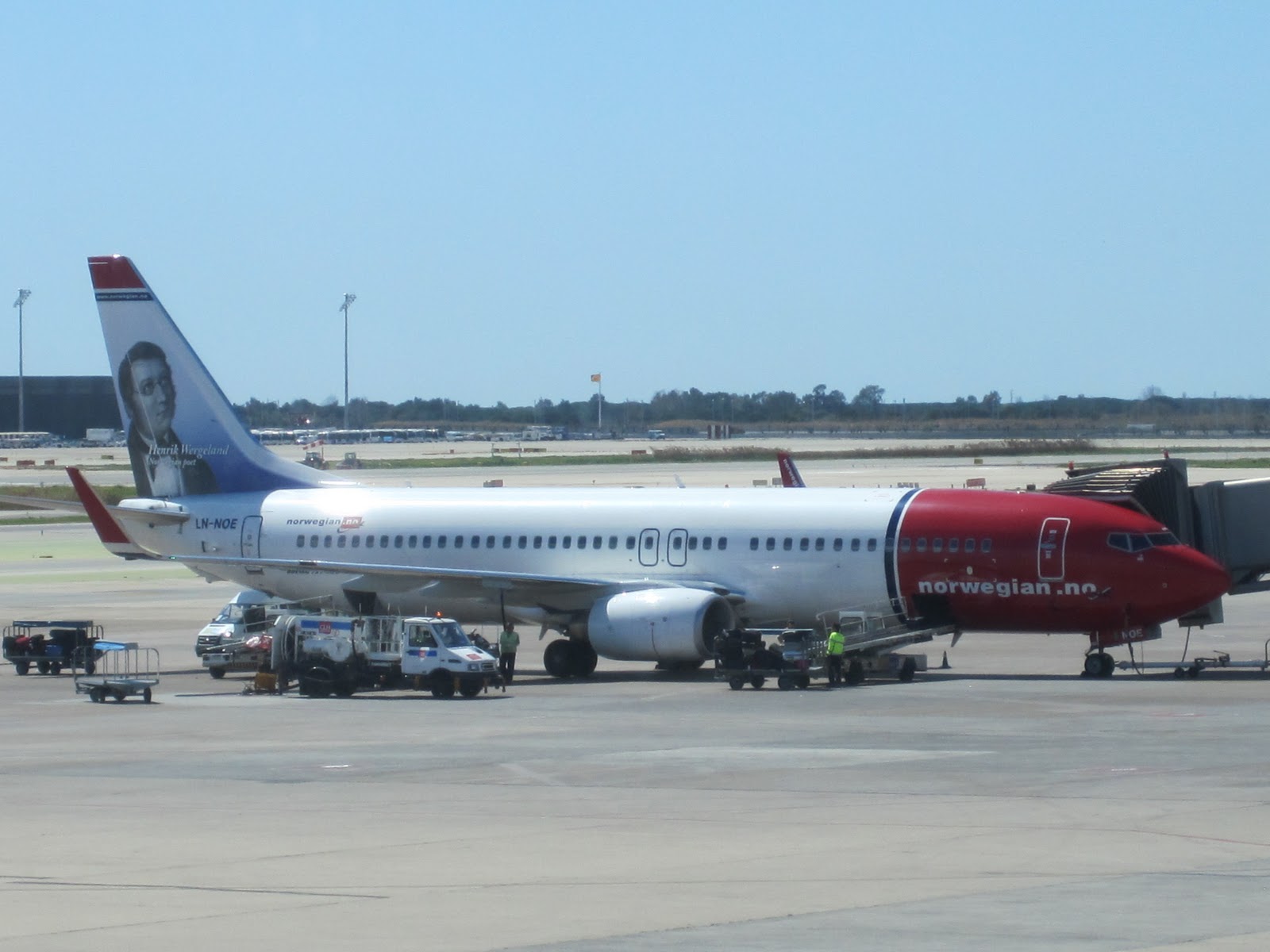
And we are starting to see some movement among European airlines too, with Norwegian leading the way, and XL Airways in France are also pondering whether to make the move (Air Berlin is also offering long haul but I would count them more as a hybrid airline rather than low cost). Delays in the production of the Boeing 787 might be delaying some long haul plans (its, in theory, superior economics might help overcome some of the obstacles mentioned above), but looks like the long haul low cost carrier is coming soon to an airport near you!
Well, to be fair, long-haul low cost airlines have operated in Europe before, but for a number of reasons they have never been able to consolidate.
From the early days of pioneering Laker Airways, back in the seventies, to the more recent Oasis Hong Kong (not to be mistaken for Oasis Airlines, a Spanish charter airline that ceased operations in the mid-nineties!), that flew Boeing 747s between London and Hong Kong, and Air Madrid, that collapsed in the run up to a Christmas holiday leaving thousands of passengers stranded, all attempts to establish the low cost long haul model in Europe have been met by failure so far...No wonder that with this track record Ryanair's rumored long haul expansion, expected to start with flights to New York Islip, hasn't materialized yet! And it is not only Europe, we find a similar situation in the US (I do not count transcontinential routes as long-haul).
The economics of long haul low cost aviation are certainly more challenging than those of the short haul variant: aircraft can not do multiple rotations, there are few long haul markets whose traffic is dense enough to support point-to-point operations without the support of a feeder, it is more difficult to take part of the market from alternative modes of transportation such as road or train (basically most of those that can or would fly are already doing so) and also most routes outside Europe are governed by a strict framework of bilateral agreements that provide little flexibility to new entrants.
However, there is a region og the World where long haul low cost carriers are not only well consolidated but also expanding fast. Air Asia X and Jetstar, that from their respective bases in Malaysia and Australia are currently competing to establish subsidiaries across the region. Singapore Airlines is also launching its own low cost airline, Scoot. And Australia's Strategic Airlines has also joined the fray after rebranding itself as Air Australia.
But in such a global industry, it is rare to see a trend confined to a single region and I think we are going to see long haul low cost airlines take hold in Europe really soon, with airlines from the Asia-Pacific region leading the way: Air Asia X is already at London Stansted and some more routes are being planned. Jetstar has also announced plans to enter the European market.
Norwegian plans to go long-haul as soon as it gets its new Boeing 787s
And we are starting to see some movement among European airlines too, with Norwegian leading the way, and XL Airways in France are also pondering whether to make the move (Air Berlin is also offering long haul but I would count them more as a hybrid airline rather than low cost). Delays in the production of the Boeing 787 might be delaying some long haul plans (its, in theory, superior economics might help overcome some of the obstacles mentioned above), but looks like the long haul low cost carrier is coming soon to an airport near you!
Thursday, 5 January 2012
Interesting marketing approach for executive aviation
I know executive aviation is not my usual blogging topic, but when I come across something in the aviation industry that I find interesting from a marketing or business point of view I like to share it here...and this is what happened when I came across Blink, a small British executive jet operator with bases at London Blackbushe (BBS), Surrey, Geneva and the Channel Islands.
Something caught my eye in their website: the user interface looks incredibly similar to that you can find in a regular "mass-market" commercial airline and so is the feel you get when checking routes and prices...even the "last minute deals" section...executive aviation is not my field, so this might not be unusual, after all, and maybe there are some other operators providing a similar booking process and taking the same marketing approach.
I do not think I am flying with them anytime soon, but I found it interesting to see some marketing innovation in the aviation executive segment!
Something caught my eye in their website: the user interface looks incredibly similar to that you can find in a regular "mass-market" commercial airline and so is the feel you get when checking routes and prices...even the "last minute deals" section...executive aviation is not my field, so this might not be unusual, after all, and maybe there are some other operators providing a similar booking process and taking the same marketing approach.
I do not think I am flying with them anytime soon, but I found it interesting to see some marketing innovation in the aviation executive segment!
Labels:
blink,
executive aviation,
UK
Friday, 23 December 2011
Meet Volotea: Spain's new airline
After months of rumors, we finally have a public announcement: Spain's new startup airline is called Volotea.
You have to be brave to start a new airline in Spain in the current economic climate, but its founders have done it before and their ability to pull an airline off the ground is beyond any doubt: Carlos Muñoz and Lázaro Ros were the founders of Vueling (now under Iberia's wings) whereas Román Pané used to be a manging director at Futura (a now-defunct Spanish charter carrier). They are backed by CCMP Capital (investor also in JetBlue).
There is not much information about the scope of the project and its planned roll-out, but all points towards the new Barcelona-based airline operating a regional network in Spain, along the lines of UK's Flybe or Finland's Blue1. This market niche, relatively shielded from the two LCC giants, has seen significant corporate activity recently, with Flybe's leading the way.
Volotea will be competing with Air Nostrum (that operates regional flights on behalf of Iberia) and with Spain's still growing high speed rail network.
If you wish to see what Volotea's livery will look like there are some pictures on airliners.net (renewed chances for all those, like me, still waiting to fly for the first time on a Boeing 717!)
And of course, there is a Twitter account too, although it does not seem to have any public activity yet...
You have to be brave to start a new airline in Spain in the current economic climate, but its founders have done it before and their ability to pull an airline off the ground is beyond any doubt: Carlos Muñoz and Lázaro Ros were the founders of Vueling (now under Iberia's wings) whereas Román Pané used to be a manging director at Futura (a now-defunct Spanish charter carrier). They are backed by CCMP Capital (investor also in JetBlue).
There is not much information about the scope of the project and its planned roll-out, but all points towards the new Barcelona-based airline operating a regional network in Spain, along the lines of UK's Flybe or Finland's Blue1. This market niche, relatively shielded from the two LCC giants, has seen significant corporate activity recently, with Flybe's leading the way.
Volotea will be competing with Air Nostrum (that operates regional flights on behalf of Iberia) and with Spain's still growing high speed rail network.
If you wish to see what Volotea's livery will look like there are some pictures on airliners.net (renewed chances for all those, like me, still waiting to fly for the first time on a Boeing 717!)
And of course, there is a Twitter account too, although it does not seem to have any public activity yet...
Thursday, 22 December 2011
Are European airlines becoming like football clubs?
This week we have got confirmation of the acquisition of a significant equity stake in Air Berlin by Eithad. The Abu Dhabi carrier will increase its stake to over 29% from the 2.99% it already owned, this will make it the first shareholder in Germany's second largest carrier.
What's interesting in this deal, though, it's not only that this is the first major foray by one of the emerging Gulf carriers in the European airline industry, although maybe not the last if we listen to the rumors coming out of Ireland, but the fact that this investment will have consequences that go beyond the financial sphere. And this raises important questions regarding the industry's competitive landscape.
As this CAPA thorough analysis underlines, Air Berlin and Etihad are going to be, from now on, close partners: financially, as Etihad is injecting €255M in Air Berlin to help finance its fleet renewal and expansion, and also operationally, as Etihad and the airlines in Air Berlin group (including Austria's Niki and Switzerlands Belair) are going to codeshare routes across their networks. Air Berlin has already announced that is moving its Dubai service to Abu Dhabi to take advantage of the enhanced connectivity that its new partner provides. We can expect Etihad to benefit as well from Air Berlin's European network at the other end of the route.
Austria's Niki and Switzerland's Belair are also going to join forces with Eithad,a s they are part of the Air Berlin group
What this means, in effect, is that Lufthansa's long haul operation is going to be facing a larger passenger drain towards the emerging Gulf hub. Plus Air Berlin-Etihad have also the opportunity to develop an alternative German hub at Berlin's new airport, possibly not a coincidence that, in what looks like a preventive move, Lufthansa has recently announced plans to create a base in the German capital, an airport where it had had a very limited presence so far. It remains unclear whether this situation is going to affect Air Berlin's recent membership of Oneworld.
And it is precisely Oneworld who could be facing a similar situation in one of its home markets if Qatar Airways acquisition of Spanair is finally confirmed. As I write these lines the outcome of this negotiation is uncertain, although a deal must be closed soon as Spanair seems to be running out of cash. As I mentioned a few days ago, Qatar Airways would have its European beachhead, and, as in Berlin's case, it would be able to use a large brand-new airport with plenty of spare capacity to expand its European feeder operation.
Most important, and hence the title of this post, getting new entrants with access to a seemingly unlimited amounts of capital could significantly alter the competitive landscape (or distort it, depending on how you look at it)...which makes me think doesn't all this seem resemble what has happened with that other glamorous but chronically loss-making European industry:...football?
Labels:
acquisitions,
Aer Lingus,
Air Berlin,
BCN,
BER,
Berlin,
Etihad,
Germany,
Qatar Airways,
Spanair
Subscribe to:
Posts (Atom)